Not without asking first.
Wild camping in Eryri needs the permission of the person who owns the land, and that is almost never the National Park.
Camping in a car park or on a roadside verge is never allowed. Sleeping in a campervan in a car park is not allowed either.
The firm answer surprises people, because the hills look open and the rule in Scotland is different. Here is where it comes from, and what to do if you still want a night out.
What the National Park actually says
The Eryri National Park Authority, the public body that manages the park, puts it in one sentence on its camping page.
“Wild camping is not permitted anywhere in Eryri without prior permission from the landowner or farmer.”
The word to notice is anywhere. The page names no height where the rule relaxes and no mountain where it stops.
The reason is ownership. The Authority says it owns little land, so it cannot give consent on anyone else’s.
Its list of land it cannot speak for covers most of what a walker crosses:
- farmland
- state and private forest
- land owned by the National Trust, the conservation charity
- riverside and coastal land
- land mapped as open country under the access law
The page names no height where the rule relaxes and no mountain where it stops.
You will read online that wild camping is tolerated above a certain height. The Authority’s page gives no such exception, and a forum post is not permission.
Walking there is not the same as camping there
This is the part most people get wrong.
The right to roam in England and Wales comes from the Countryside and Rights of Way Act 2000, usually shortened to CROW. Schedule 2 of the Act lists what that right does not include.
Paragraph 1(s) names camping, in the same line as organised games, hang-gliding and paragliding.
So a hillside shaded as access land on your map is somewhere you may walk freely. Pitching a tent on it still needs the landowner’s permission.
The Authority’s camping page cites the same paragraph. The law and the Park give one answer.
Car parks, lay-bys and campervans
No car park in the park is a place to spend the night, in a tent or in a vehicle.
- Tents: camping in car parks or on roadside verges “is not allowed at any time”, in the Authority’s words.
- Campervans and caravans: staying overnight in a car park is not permitted anywhere in the National Park.
- Lay-bys and the roadside: the Authority’s campervan page asks you to avoid them too.
This matters most at popular walking start points, where an early start tempts people to sleep in the car.
The realistic early options are the park and ride or the first Sherpa’r Wyddfa bus. Neither involves a night in the car park.
Why Scotland is different
Many walkers arrive expecting the Scottish rule.
In Scotland, camping is part of the public right of access. The Scottish Outdoor Access Code is the official guide to those rights.
It allows “lightweight camping in a tent, in small numbers and for no more than two or three nights in one place”.
Wales has no such right. Eryri sits under the CROW Act, and the CROW Act leaves camping out.
If you want a night in the hills anyway
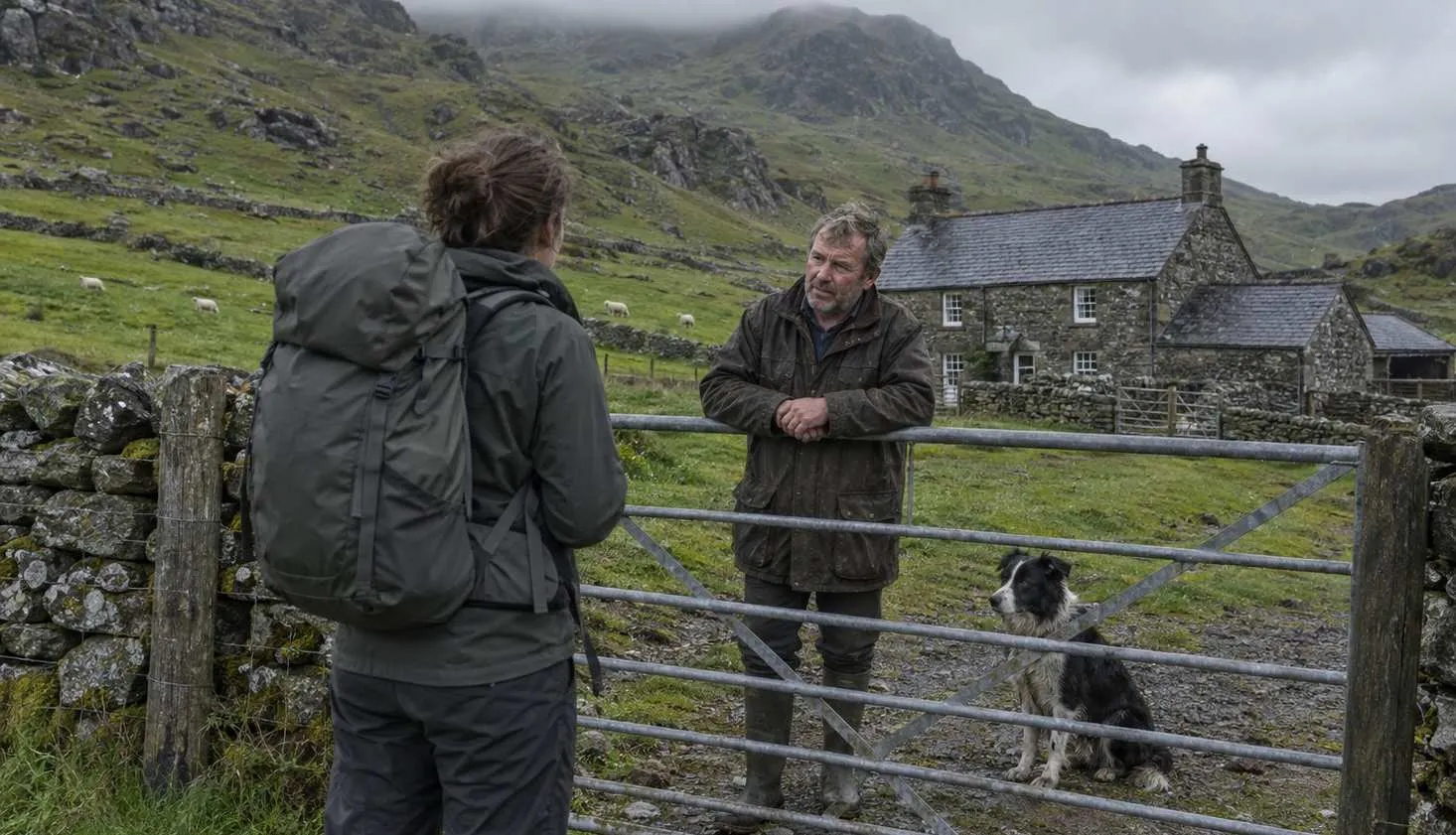
The legal route is to ask before you go. Most of the park is privately owned and much of it is farmed, which is why the Authority’s wording is “the landowner or farmer”.
The camping page does not say how to find them. In practice that means asking at the farm nearest your planned pitch.
With permission, the Authority asks you to follow its Eryri Wild Camping Code. The main points, in short:
- Camp high and off the beaten track, well away from houses and farms.
- Pitch late in the day and leave early.
- Stay for one night only.
- Keep to one or two tents, with no groups.
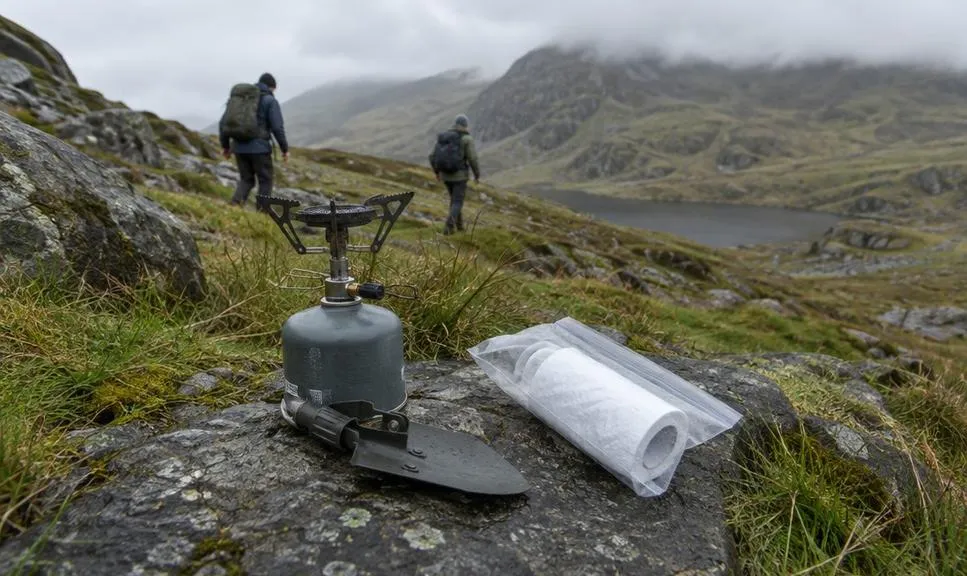
- Light no fires and no disposable barbecues. Cook on a gas stove, with care.
- Go to the toilet at least 30 m from any water or path, and bury waste at least 15 cm deep.
- Take away all litter and food scraps.
- Move on without argument if a landowner asks you to.
The 15 cm rule is the one people are least ready for. A small camping trowel weighs little and makes it possible on stony ground.
The Amazon link above is an affiliate link. Should you buy through it, a small commission comes back to the site, and your price stays as it was.
The last line of the Code is the one to keep. If you are in any doubt about whether you can camp, choose another location.
A night high in the hills means staying through the evening and morning weather. Read the mountain forecast for both, not just the walk in.
Where to sleep instead
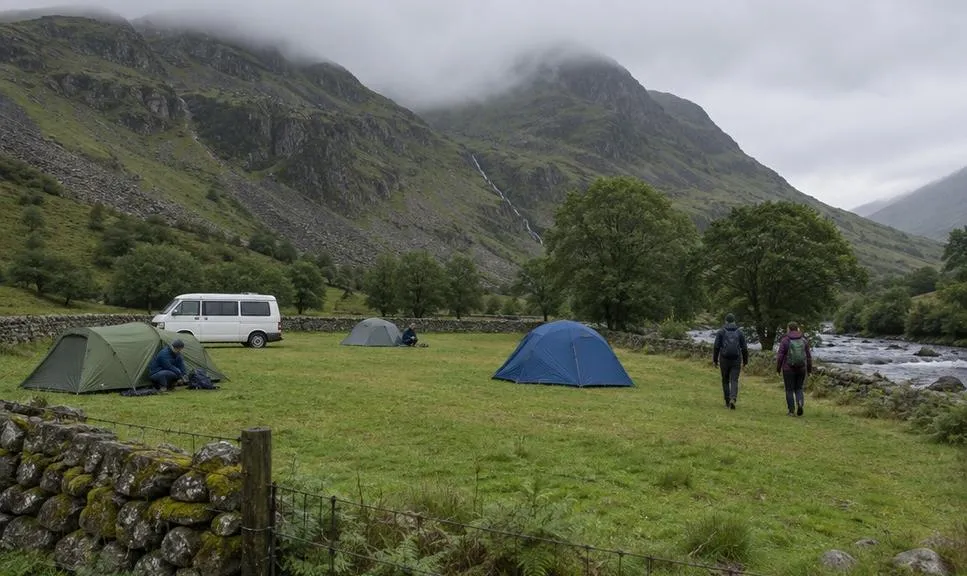
The Authority’s own recommendation is an official campsite, booked well ahead.
- Campsites: most of the park’s official sites also take campervans and caravans. They fill quickly from April to September.
- Youth hostels: the Authority points to the YHA hostels inside the park, and they book up too.
Midweek is the easiest way to get a place in summer. The Authority says weekends are busiest, and it suggests midweek for the hostels as well.
A campsite in the valley still gives you the early start. It just leaves the tent at the bottom.
When this answer changes
It changes in one way. A landowner’s yes is the whole difference, and the Code still applies once you have it.
It does not change with height, with a very small tent, or with leaving before dawn. It does not change because you have camped there before without being asked to move.
The usual kit for a day walk in Snowdonia covers the walk. A night out needs its own shelter, stove and permission on top of it.
We compile and explain public route and safety information. We guide nobody and sell nothing on the hill.
You may find an abandoned camp, with a burnt patch and a tent left behind. The Authority asks you to report it through Gwynedd Council’s website.