Walk up, ride down, save the knees on the long descent. It is one of the most common questions asked about Yr Wyddfa.
The answer is no, at least not as anything you can book before you leave the house.
The railway sells no downhill seat you can book.
Better to know that now than at 1,085 metres with tired legs.
What the railway actually sells
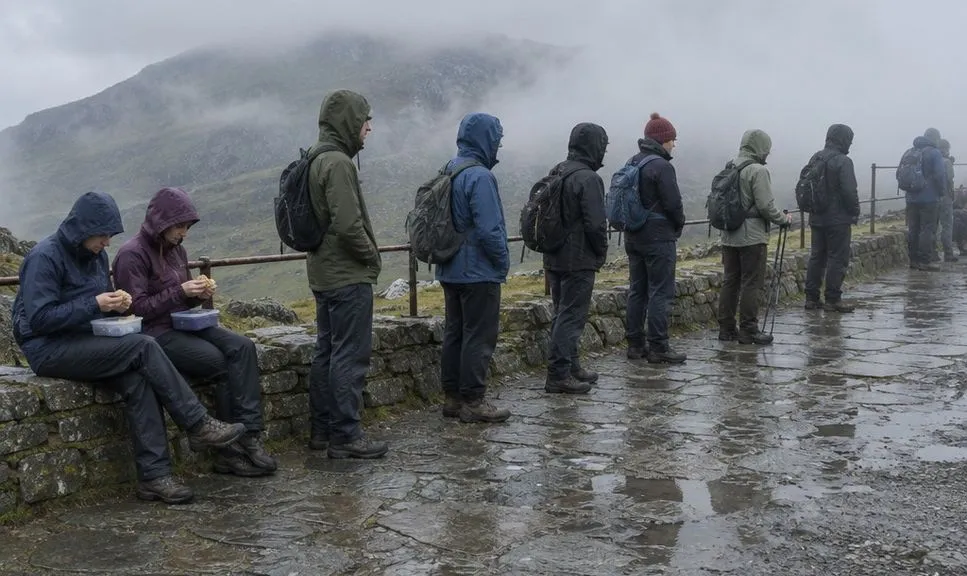
Three kinds of ticket matter to a walker. Only one of them is a full return.
- Return from Llanberis, boarded at the bottom and ridden both ways.
- Advance single, sold “exclusively for the journey up the mountain”.
- Standby single from the top, sold at the summit on the day, subject to space.
Only the standby single covers the way down, and you cannot buy it before you climb.
Why the walk-up return is refused
The railway states the rule on its own visitor page: “A return ticket is only valid when boarding a train at our Llanberis Station”.
It says it cannot allow passengers to hike to the summit and then use a return ticket solely for the journey back down.
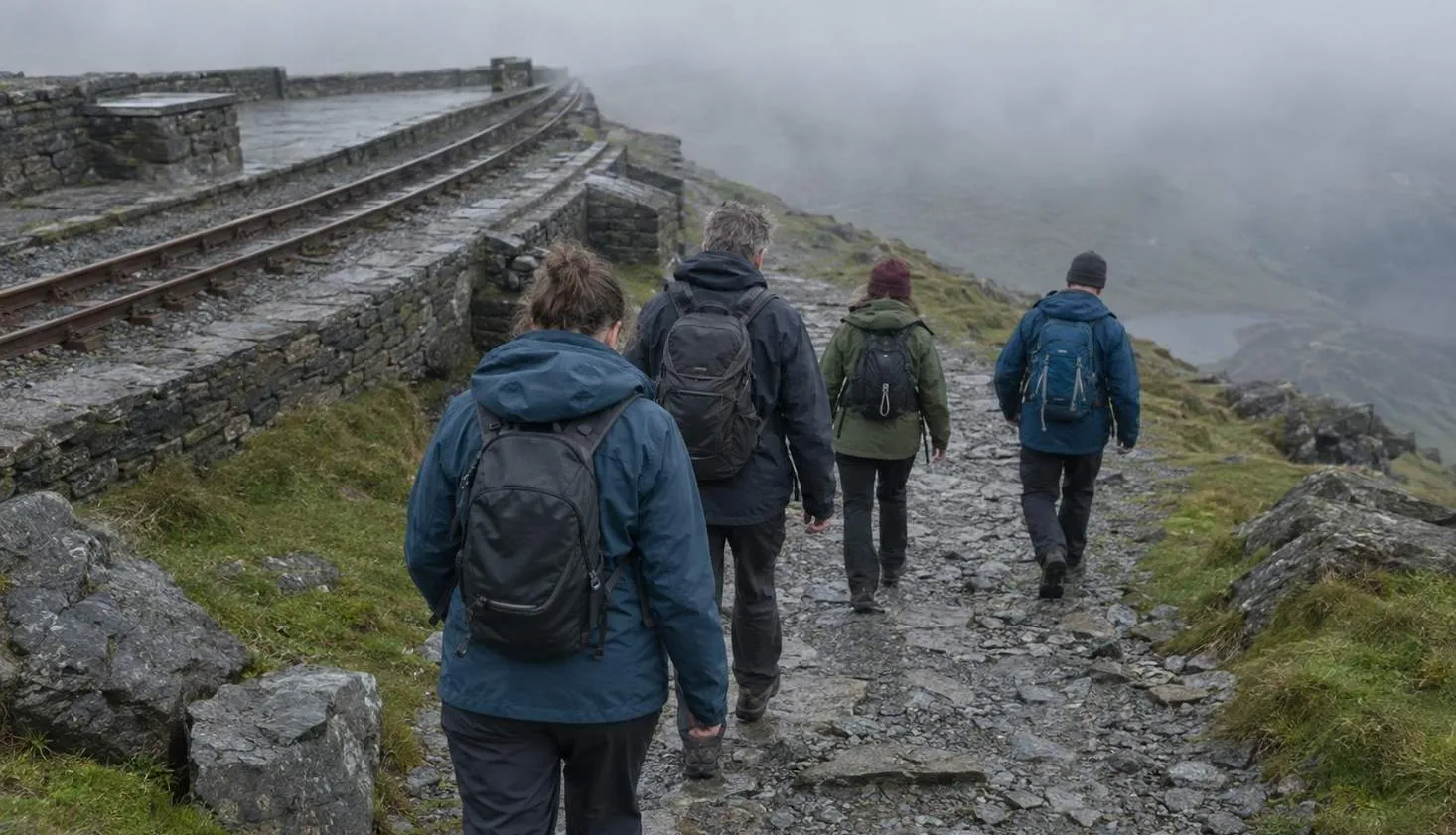
The stated reason is what happens when the trains stop. Sudden high winds have stopped trains leaving the summit before, and passengers were left stranded with no way back down.
Wind at that height decides when the trains run, often at the last minute.
The standby seat from the top
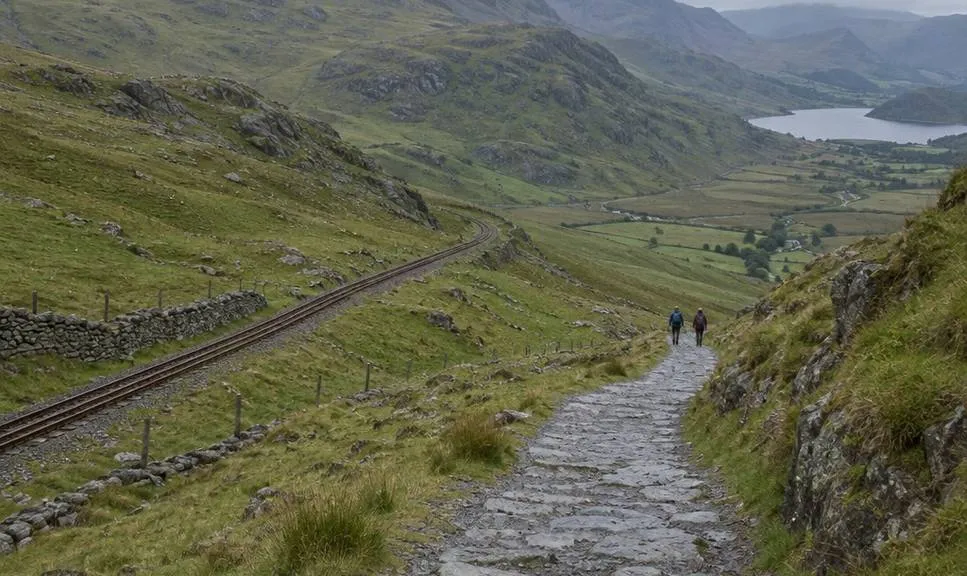
The standby single is sold first-come, first-served at the summit.
Seats are subject to availability. The railway advises you to “be prepared to walk back down if required”.
Passengers riding up get a thirty-minute stopover at the summit building before their own train leaves. Most seats going down are already taken.
Plan on a standby seat and you are relying on space nobody has promised you.
Only assistance animals travel on the railway, so bringing a dog rules the train out completely.
So plan the descent, not the rescue
A day on Yr Wyddfa is a there-and-back walk, and the way down is most of its second half.
Build the day around that and the question stops mattering.
- Pick a route you are happy to reverse, because the six paths up Snowdon differ far more in descent than they do in ascent.
- Work the timings backwards from your finish, not forwards from the car park, using the method in how long it takes to climb Snowdon.
- Know where the bus runs, because the Sherpa’r Wyddfa service links the main start points and parking and transport in Snowdonia has the detail.
Distance, time, parking and conditions decide the day.
When the train is the right answer
The railway is a good day out. It is simply a different day out from a walk.
It suits someone who cannot manage the ascent. It suits a mixed group splitting up for a few hours. It works as a bad-weather fallback when the tops are out of the question on foot.
One person can walk while the rest ride, provided the walker plans a full walking day and the riders hold a proper return.
Ride up and back on a return from Llanberis if the summit is the point and the climb is not.
The train does not work as a safety net for a walk you are unsure about. If the descent worries you, that is a signal about the route, not about ticketing.
The season, and the months it stops short
The railway runs to the summit from 1 May to 25 October. From 28 March to 30 April it goes only as far as Clogwyn, three quarters of the way up.
In 2026 the last train runs on 1 November, according to the Snowdon Mountain Railway.
From 5 October, selected services go only as far as Clogwyn because of essential works.
Dates shift a little each year. Outside those months there is no train at the top at all, whatever the weather is doing.
Check the current year on the railway’s own site before building a day around it.
Deciding at the car park
Make the call at the bottom, where you have options, rather than at the top, where you have one.
If the full descent is more than the group has in it today, take a shorter route or a different hill instead.
We compile and explain public route and safety information. We guide nobody and sell nothing on the hill.
That is a decision, not a defeat, and it is much easier to make before you start walking.