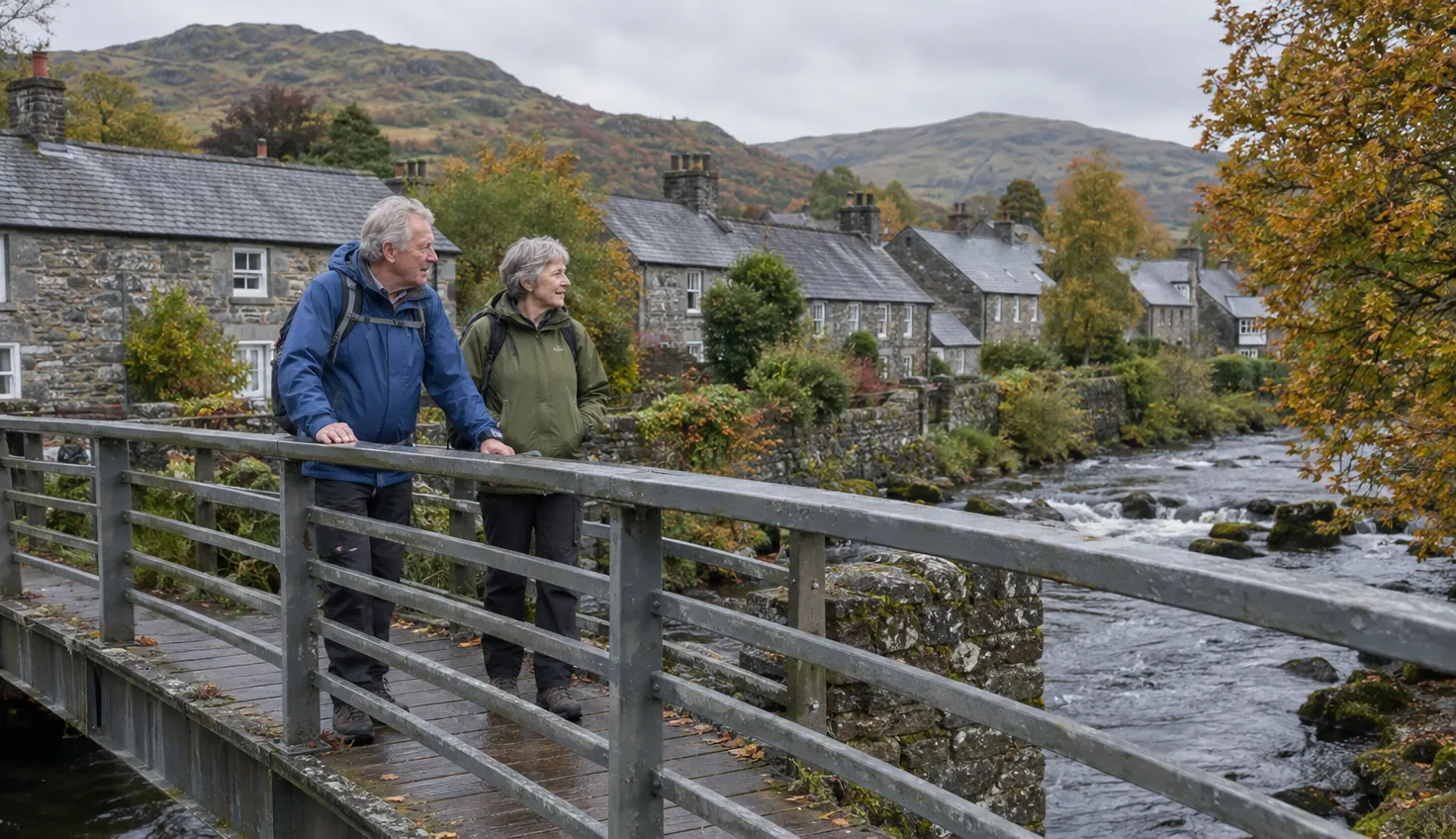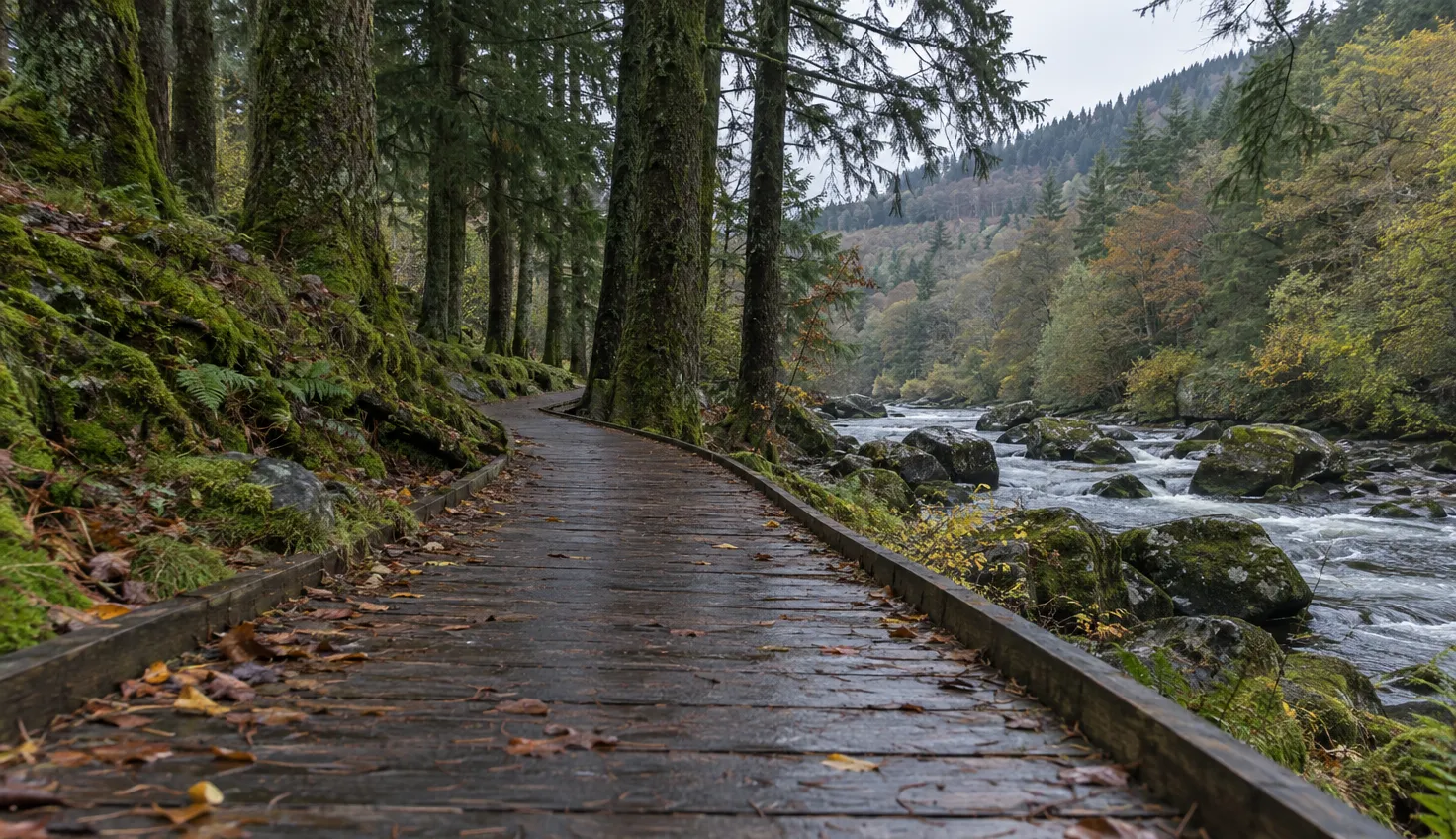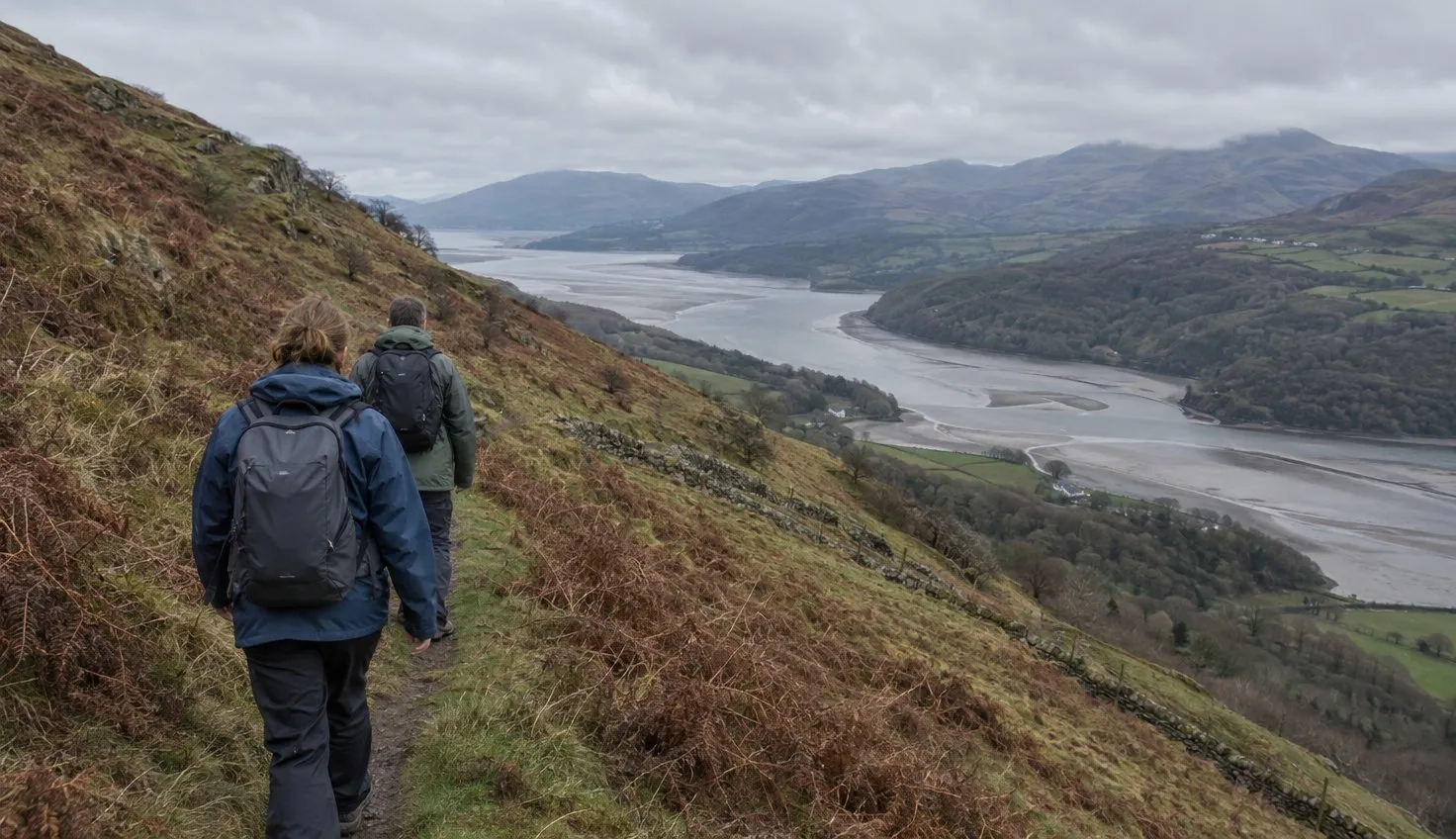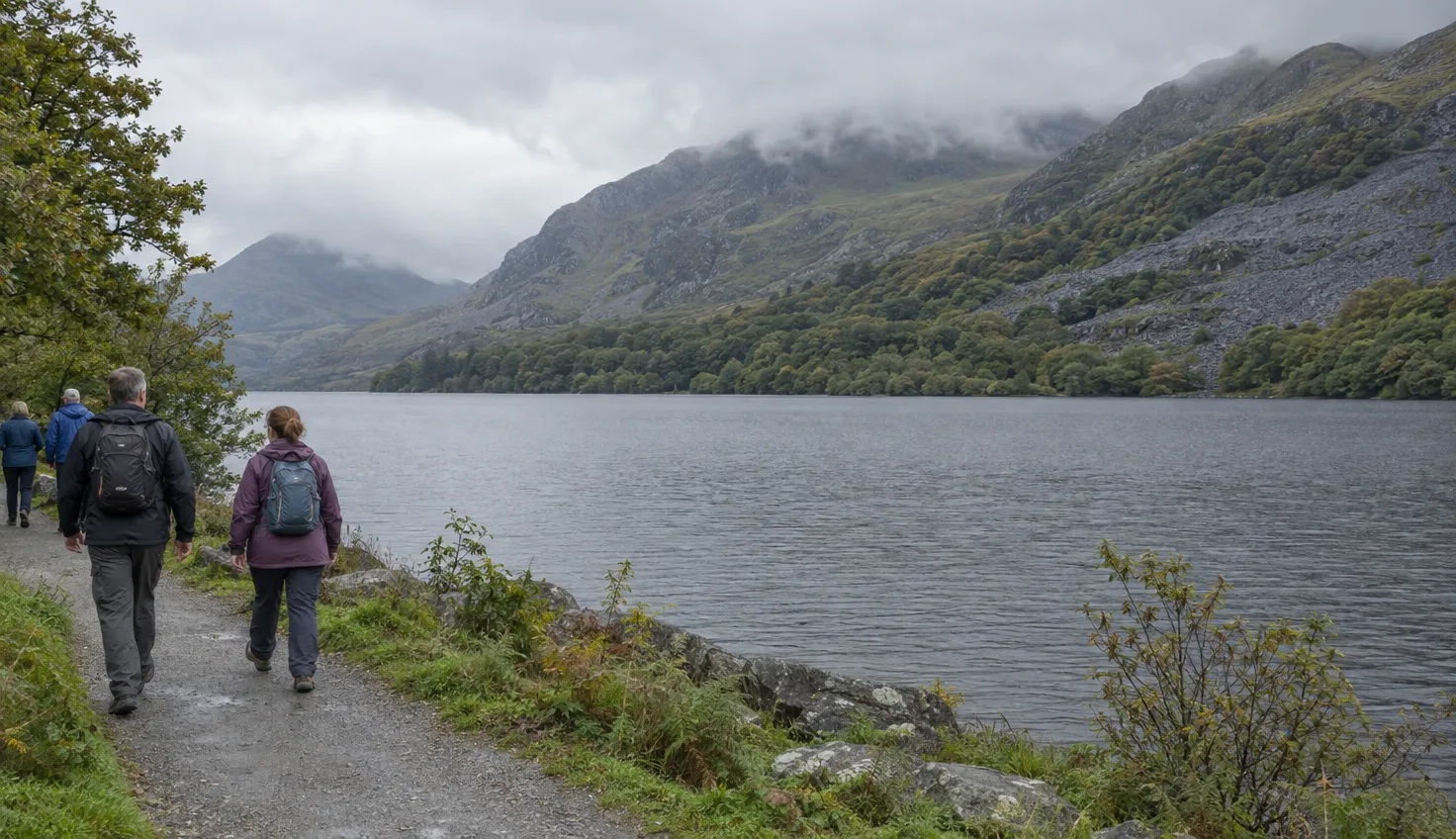
The Lake Walk and marked quarry trails both start from the Gilfach Ddu car park in Llanberis, and neither needs a mountain day.
The lake walk is about 5 miles (8 km) and takes around 2.5 hours. The Vivian quarry trails run from 0.9 miles in about an hour to 3.1 miles in about 2.5 hours.
Both stay on public paths. The inner quarry beyond them is not open to walkers.
The lake walk, 5 miles
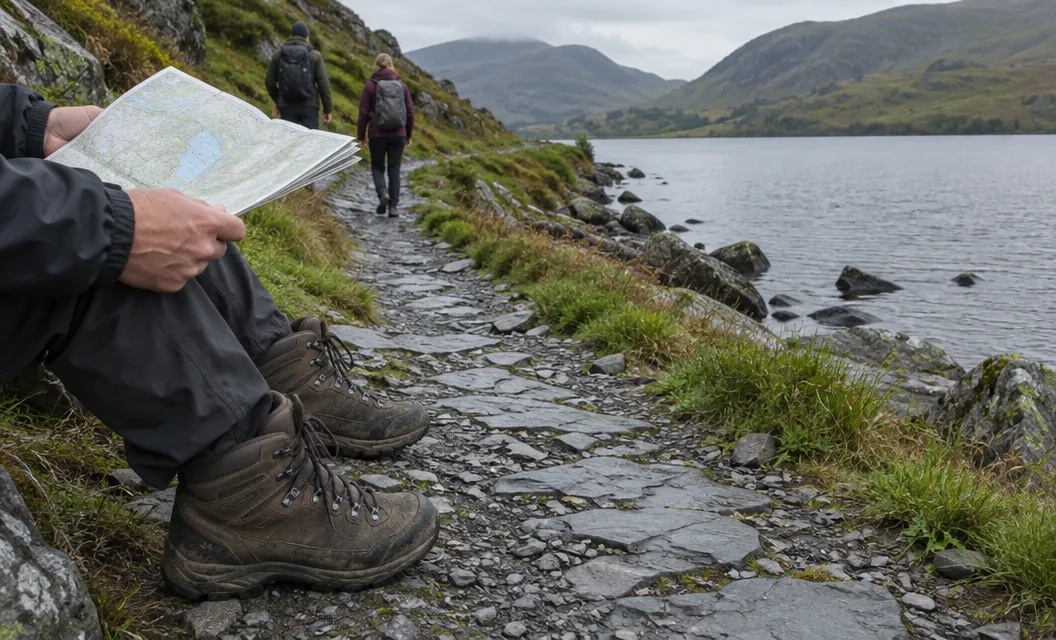
Parc Padarn, the country park’s own website, calls this one the Lake Walk. It is marked with white waymarks, and you pick them up past the craft workshops.
The park gives its length as about 8 km, or 5 miles, and its time as 2.5 hours.
On the way you:
- cross the railway bridge, where slate once travelled from Dinorwig to Y Felinheli
- pass the Dinorwig Quarry Hospital, now a museum, with views over the lake
The Quarry Hospital is an indoor stop on this walk. Its opening times are on the park’s visit page.
The Quarry Hospital is also where the park wardens are based. It is a 5 to 10 minute walk from Gilfach Ddu.
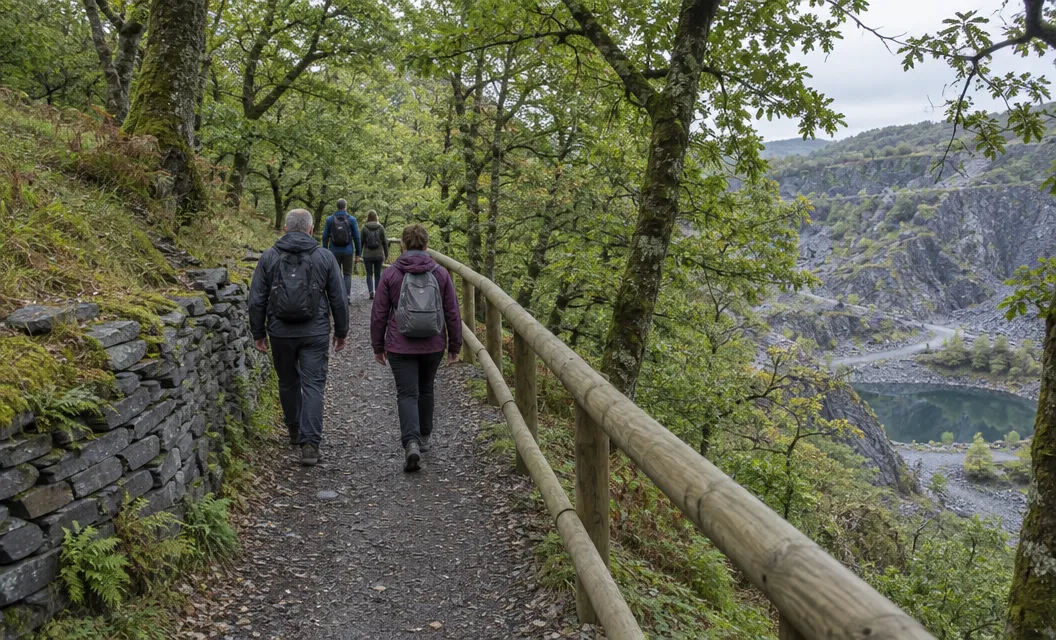
The quarry walks, 0.9 to 3.1 miles
The Vivian Trail follows dark blue waymarks. Head towards the Llanberis Lake Railway station, then keep to the blue markers to Vivian Quarry and its 20-metre-deep pool.
There are two lengths:
- Lower trail: about 1.5 km (0.9 miles), around 1 hour.
- Top trail: about 5 km (3.1 miles), around 2.5 hours.
The top trail climbs to the quarry’s upper levels and runs through Coed Dinorwig woodland. You pass Barics Dre Newydd, where quarry workers lived during the week.
The lower Vivian Trail is the shorter marked quarry walk, taking about an hour. Consider it for a short family outing, keeping children supervised.
Two other marked routes start from the same car park: the green Nature Walk and the yellow Woodland Walk.
Keep to the paths
Parc Padarn’s marked trails and the upper Dinorwig quarries are different ground.
The British Mountaineering Council (BMC), the organisation for climbers and hill walkers, covers the upper quarries on its access pages. It says they suffer rock falls on a regular basis.
It adds that First Hydro and the other landowners do not give permission for public access away from the public paths.
Parc Padarn asks the same of every visitor:
- follow only way-marked trails
- do not enter building ruins
- keep away from old quarry structures
- supervise children at all times
The waymarked routes are open to you; the quarry workings beyond them are not. Some park paths have uneven surfaces, steep drops and deep water.
The Slate Museum is closed
The National Slate Museum is closed for a redevelopment project. Its website said so on 15 October 2026.
Do not plan the day around it. The Quarry Hospital on the lake walk is a different building and a separate visit.
Parking and the bus
The park has three pay-and-display car parks: Gilfach Ddu, Dolbadarn and Y Glyn. You can also pay by phone.
Gilfach Ddu is where every marked trail begins. For other starting points, compare parking across Snowdonia.
The Sherpa’r Wyddfa bus, the local network that links Eryri’s villages, serves Llanberis. Its S1 runs between Caernarfon and Betws-y-coed, and its S2 between Bangor and Pen-y-Pass. Check the dated timetable, which lists times from 28 March 2026.
Events in the park, such as the Welsh Winter Swim, can change access and how busy it is, so check the host before you travel.
When you want the mountain instead
On a day when Yr Wyddfa is in cloud, choose the lake walk or the lower Vivian Trail. For children not ready for height, Snowdon with kids sets out the next step up.
Walkers who want the summit from the same town can read about the Llanberis Path.
We compile and explain public route and safety information. We guide nobody and sell nothing on the hill.
Choosing your waymarks at Gilfach Ddu
Walk past the craft workshops and follow the white waymarks for the 5 mile lake walk. Turn towards the lake railway station and follow the dark blue waymarks for the quarry trails.