The Mawddach Trail is a flat old railway line from Dolgellau to the coast at Barmouth. The Eryri National Park Authority grades it Easy, Access for All.
It is about 9 miles (15 km) one way; allow 4 to 6 hours.
Conventional wheelchairs, pushchairs and comfortable shoes or trainers all suit it. You can walk the whole line or join it part way.
The path itself
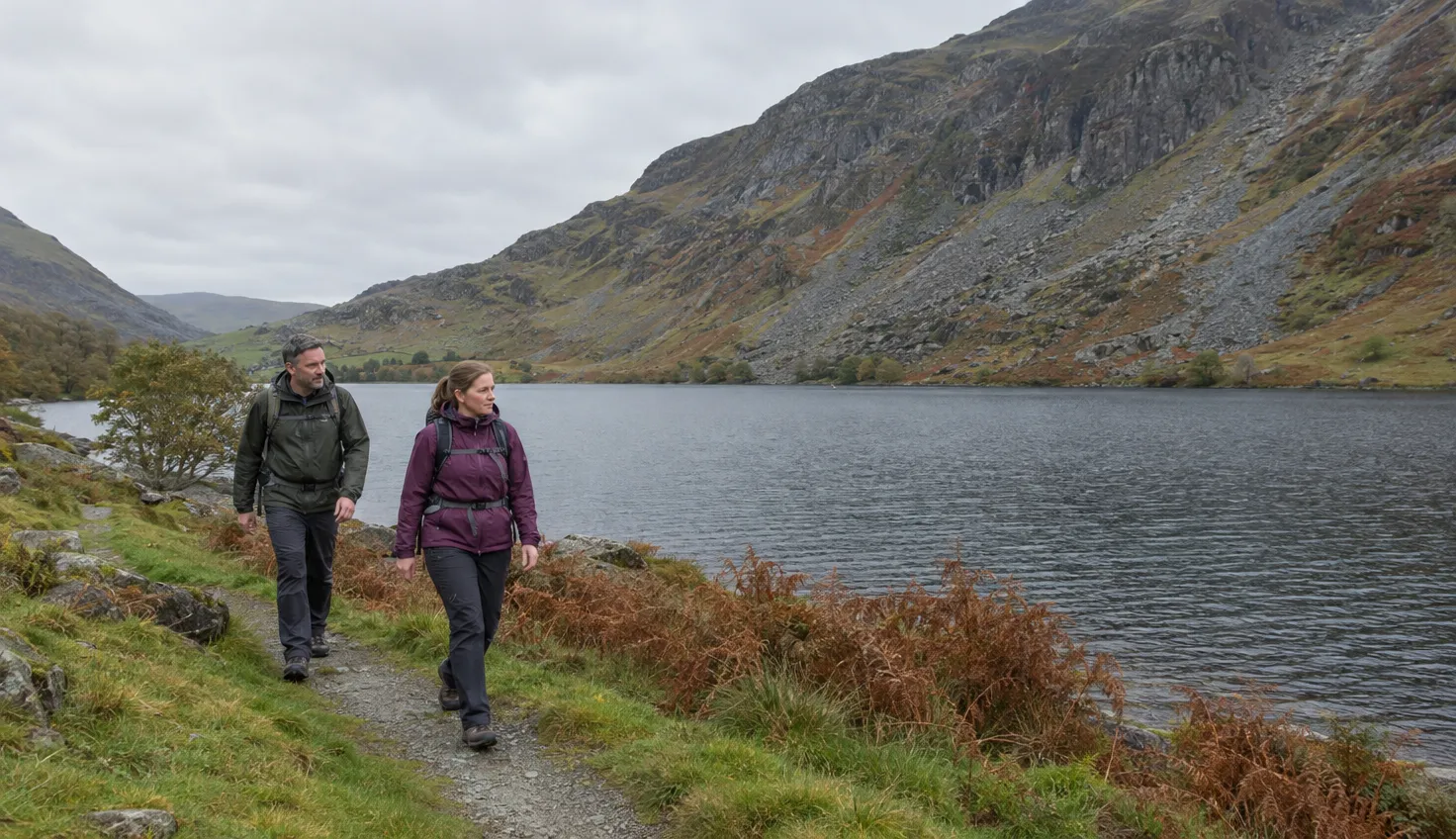
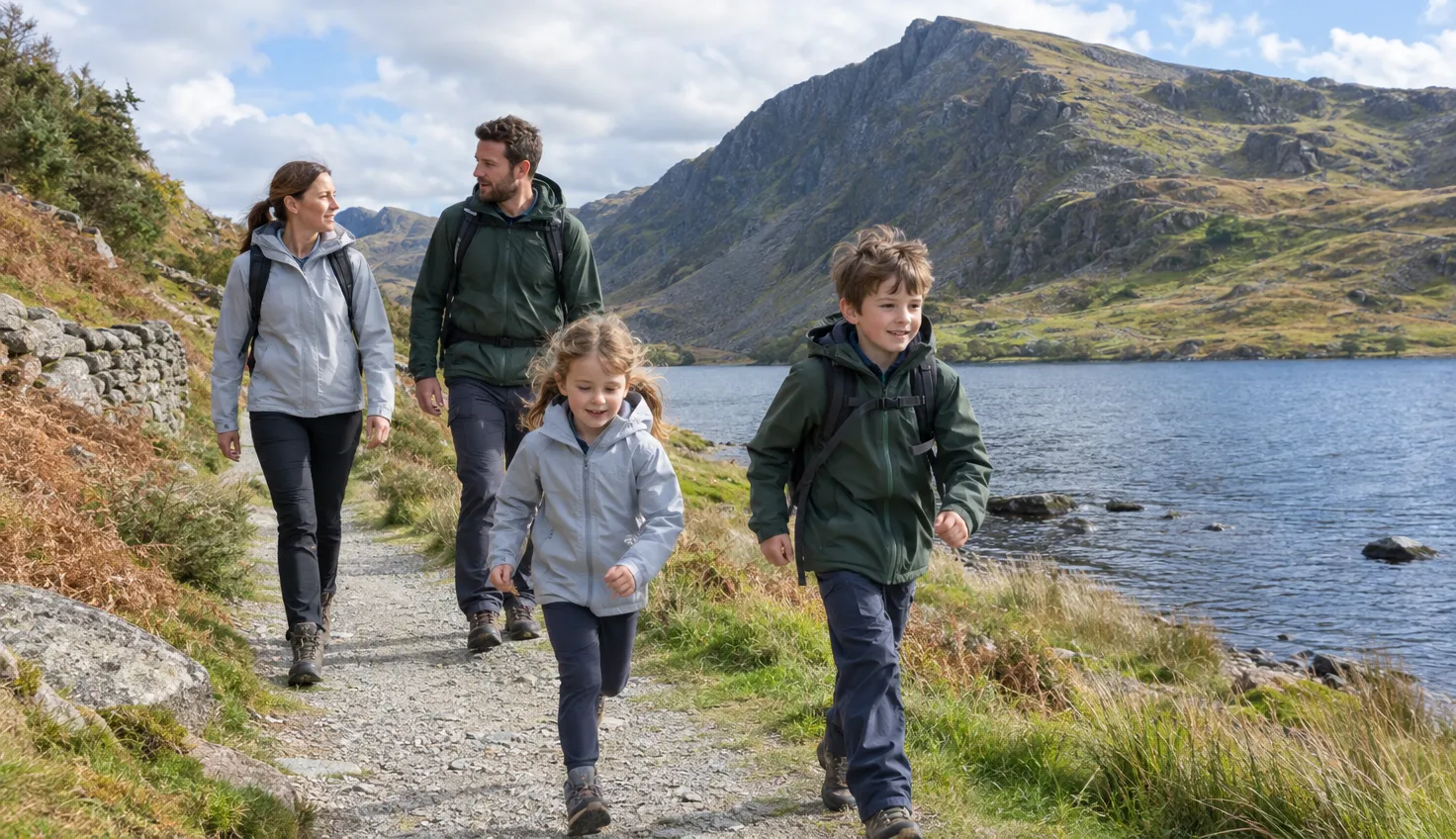
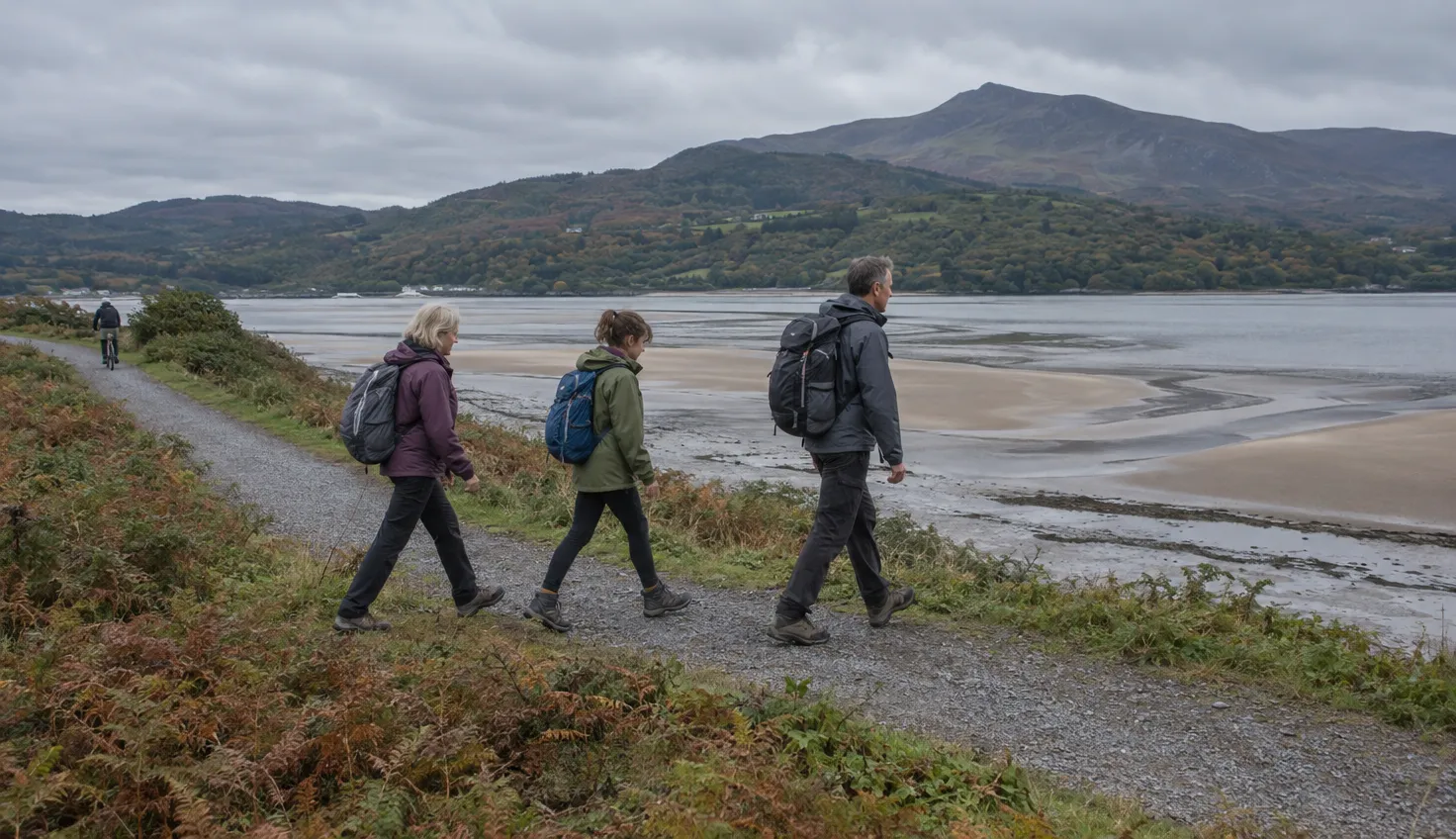
The surfaces are largely flat and even, with no steps or steep sections. The trail is clearly marked. Between Dolgellau and Morfa Mawddach it is up to 3 m wide for most of its length.
The gates are wide enough for wheelchairs, pushbikes and pushchairs.
The surface is rough and unbound in places.
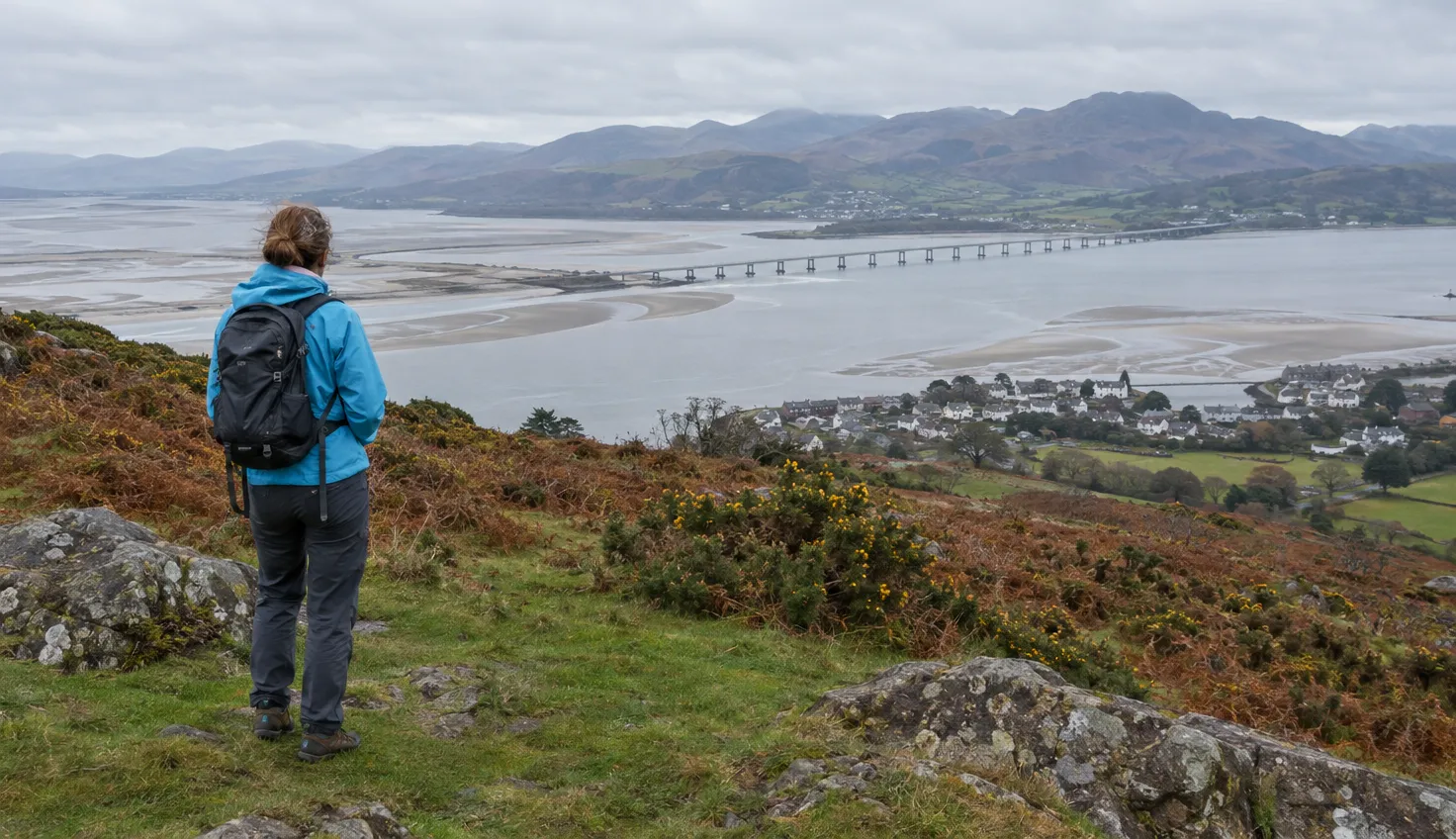
The views run across to Diffwys and the Rhinogs, and up the estuary to Y Garn and the Arans beyond Dolgellau.
Expect bikes. The trail is part of National Cycle Network Route 8.
Where to join
Six places have a car park and an entrance to the trail (October 2026). From Dolgellau towards the coast, they are:
- Y Marian, Dolgellau: the inland end.
- Pont y Wernddu: the next joining point.
- Penmaenpool: the site of the old station.
- Arthog
- Morfa Mawddach: the station and the foot of the bridge.
- Barmouth: the coast end.
The Morfa Mawddach station car park has 20 spaces.
The trail website mawddachtrail.co.uk warns of a narrow footbridge with a steep up-ramp between Dolgellau and Pont y Wernddu. It says the National Park suggests wheelchair and trike users join at Pont y Wernddu.
Toilets and the free Tramper
Accessible toilets are at Dolgellau, Penmaenpool, Morfa Mawddach and Barmouth, with accessible benches and picnic tables.
The Morfa Mawddach toilets are usually only open in the summer months or school holidays.
The Park hires out a Tramper, an all-terrain mobility scooter, free of charge. Donations are welcome.
The old railway and the George III
The trail follows the trackbed of the railway from Barmouth to Ruabon, which the Park says opened in 1865 and closed in 1965.
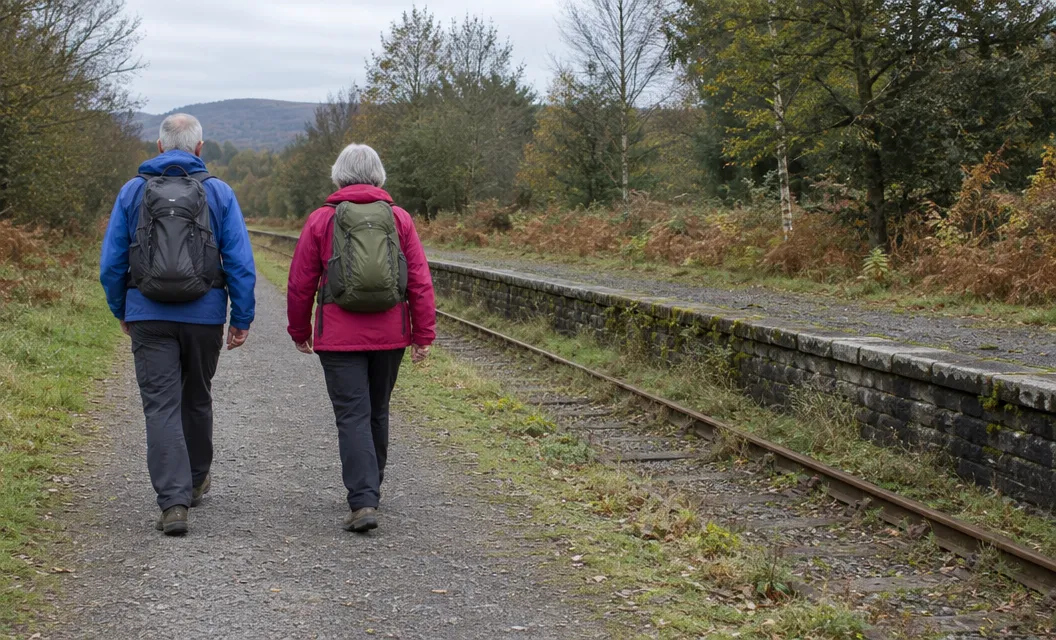
At Penmaenpool, the old station is now an annexe of the George III hotel. The trackbed through the site is the Mawddach Trail.
The hotel welcomes non-residents to its bars. Its Cellar Bar is popular with hikers, dog-lovers and families.
Morfa Mawddach and Barmouth Bridge
Barmouth Bridge is 820 m of wooden railway viaduct, the longest timber viaduct in Wales.
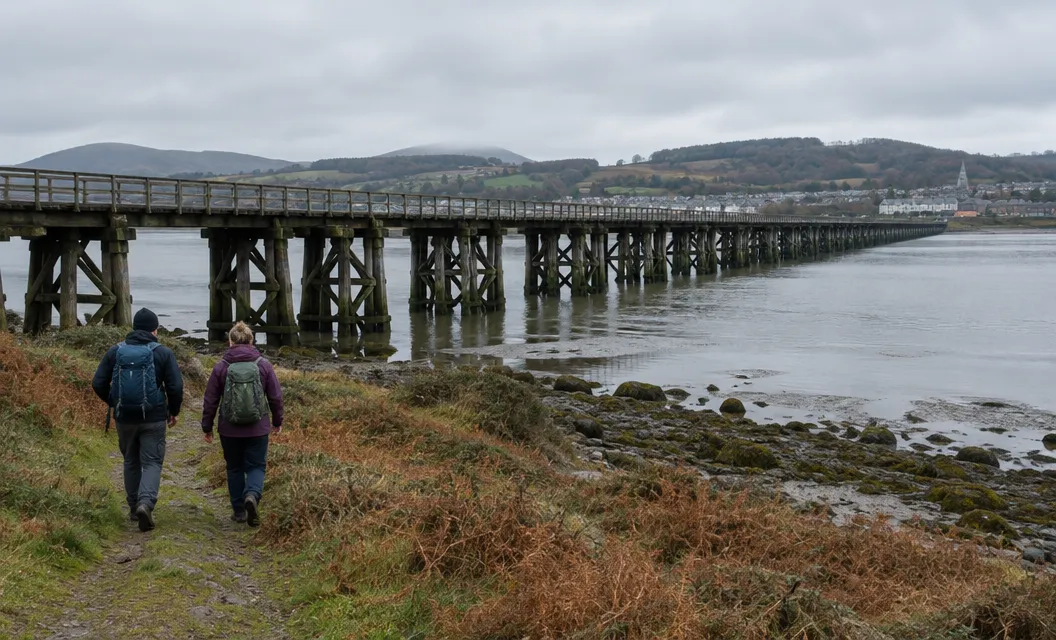
It carries the railway, walkers and cyclists, and the wooden bridge itself is flat and wide. Look out for sand blown onto the path after the bridge.
At the Barmouth end, the exit to the busy A496 is very steep. It joins the road on a blind corner with no footpath. Everyone needs to take care here.
A 300 m section between the railway bridge and Barmouth town centre is on the A496.
The Arthog Bog reserve is reached from the trail 200 m east of Morfa Mawddach station. You may see grass snakes, siskins, dragonflies, iris and spearwort.
Getting back by train or bus
Morfa Mawddach is a request stop on the Cambrian Coast Line.
To get off the train, tell the conductor in good time. To board, give the driver a clear hand signal as the train approaches.
Morfa Mawddach is step-free category B2, with some step-free access to all platforms. Barmouth is category B1, where access to all platforms may be by long or steep ramps or via streets.
Buses run on either side of the estuary. The TrawsCymru T3 runs between Wrexham and Barmouth.
Check the bus and train times for your day on Traveline Cymru before you set off.
Choosing your stretch
Decide how far you want to walk, then how you will get back.
- The whole trail, Dolgellau to Barmouth: 4 to 6 hours one way. Look at the T3 bus for the return.
- Morfa Mawddach to Barmouth over the bridge: 2 miles (3 km), with a station at each end.
- Out and back from one car park: all six joining points have one.
The Panorama Walk above Barmouth is Hard/Strenuous and, the Park says, not suitable for novice walkers. This trail is the easier option.
Near Dolgellau there is also the Precipice Walk, and Cadair Idris stands above the same estuary.
We compile and explain public route and safety information. We guide nobody and sell nothing on the hill.