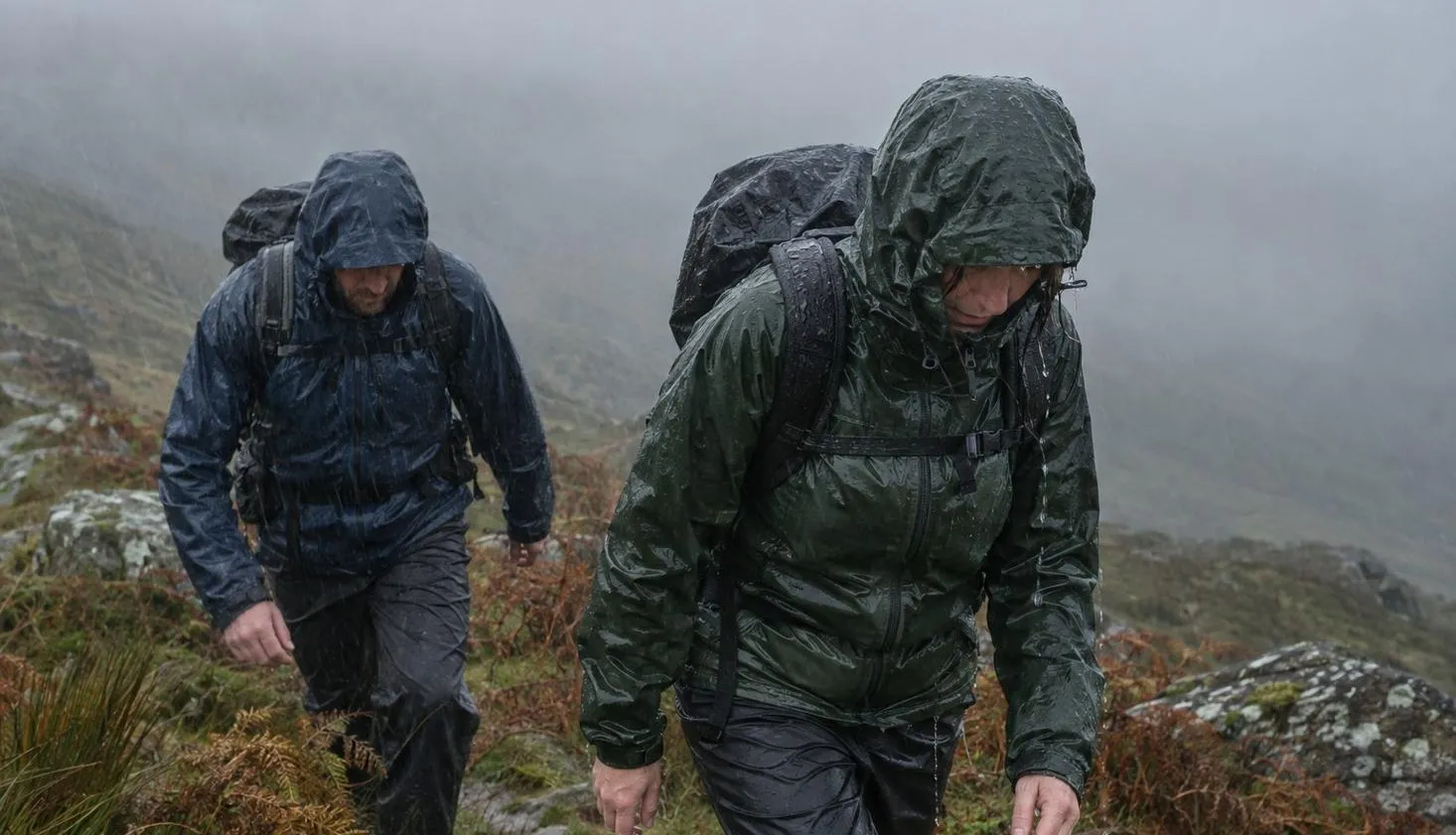
Rain on a Welsh hill is not a light shower with a gap after it. It arrives sideways and stays.
For a normal wet day on Snowdon the Berghaus Deluge Pro 3.0 is the one to buy, on the figures below. The Regatta Pack-It III covers most of the same needs for occasional hill days.
The links to Amazon on this page are affiliate links. Should you buy through one, a small commission comes back to the site, and your price stays as it was.
The three compared
Every figure here is the one the manufacturer publishes, linked in each section below.
Slide it sideways for the rest →
| Deluge Pro 3.0 | Pack-It III | Pakka | |
|---|---|---|---|
| Waterproof rating, mm | 12,000 | ISOLITE, see below | 1,500 |
| Seams | Not stated | Taped | All taped |
| Hood | Fixed, one adjuster | Shock cord adjuster | Packs into collar |
| Weight, g | 340 | Not stated | Not stated |
| The real limit | No pit zips listed | Varies by stock | Light/moderate rain |
Berghaus Deluge Pro 3.0, Regatta Pack-It III and Mountain Warehouse Pakka, on their makers' own figures. Regatta says the rating varies by stock; the Pakka is rated for light to moderate rain only.
Read the middle column first. A 1,500mm jacket and a 12,000mm jacket are not the same purchase, whatever they cost.
| Your day out | What to carry |
|---|---|
| You are on Welsh hills more than a couple of times a year | Berghaus Deluge Pro 3.0 |
| You want a packable jacket with taped seams and an adjustable hood | Regatta Pack-It III |
| You want a packable jacket for town, travel and low level paths in ordinary weather | Mountain Warehouse Pakka |
Berghaus Deluge Pro 3.0
You are on Welsh hills more than a couple of times a year
Berghaus Deluge Pro 3.0 Waterproof Jacket 12,000mm hydrostatic head340g, polyester with a polyurethane membrane Read the full specification on AmazonBest for anyone walking Welsh hills more than once or twice a year.
Berghaus publishes a hydrostatic head of 12,000mm and breathability of 21,000 G/M2/24hrs for this jacket, in a polyester shell with a polyurethane membrane. It weighs 340g.
That rating is comfortably above what a wet Snowdon day asks of a jacket.
Its real compromise is the hood. Berghaus describes it as a fixed hood with single point adjustment. One adjustment point gives you less control in a crosswind than two or three.
Berghaus does not list underarm zips, and does not state whether the seams are taped.
Regatta Pack-It III
You want a packable jacket with taped seams and an adjustable hood
Regatta Pack-It III Waterproof Jacket Taped seamsAdjustable shock cord hood Read the full specification on AmazonThe one to buy if you want a jacket that packs into its own stuff sack.
Regatta lists taped seams and an adjustable shock cord hood in a lightweight 100% polyamide ISOLITE fabric that packs into its own stuff sack.
One warning, and it comes from Regatta rather than from us.
Their own page gives the fabric as ISOLITE 10000 in the specification list and ISOLITE 15000 in the description. It adds that “due to mixed seasonal stock, the waterproof rating of this product may vary”.
Either figure is a real mountain rating. It is worth knowing you may not be able to tell which one you have received.
An adjustable shock cord hood and taped seams are the two things that matter most here, and this jacket has both.
Mountain Warehouse Pakka
You want a packable jacket for town, travel and low level paths in ordinary weather
Mountain Warehouse Pakka Waterproof Jacket All seams tapedTested to 1,500mm Read the full specification on AmazonNot the one for a Welsh mountain day, and it is on this page so you know that before you buy it.
The Pakka is well made for what it is. Mountain Warehouse states that all seams are taped and the hood packs into the collar, in a 100% polyamide shell.
The rating is the problem for our purposes. Mountain Warehouse tests it to 1,500mm and describes it as suitable for light to moderate rain.
Snowdon in a westerly wind is neither of those things. As a packable jacket for town, travel and low level paths in ordinary weather, it does what it claims.
How these were chosen
Nobody here has tested these jackets on a hill. This is a comparison of what each manufacturer publishes, checked against their own product pages on 10 September 2026.
The general advice below comes from the British Mountaineering Council and Adventure Smart Wales.
Where a maker does not publish a figure, this page says so rather than guessing it. That is why several cells above read “not stated”. None of the three lists underarm venting, which matters for the reason given further down.
The overtrousers most walkers leave at home
This is the piece people skip, and skipping it is the usual mistake, not choosing the wrong jacket.
The British Mountaineering Council is direct about it. “A waterproof outer layer of jacket and trousers will help to keep you dry”, and combined with your insulating layers it can prevent “any dangerous reduction in body temperature”.
The BMC also gives one buying rule worth following. “Make sure there are zips down the sides”, so you can pull them on over your boots.
Check the Berghaus Deluge 2.0 overtrousers on Amazon
Wet legs cool you fast. The BMC puts it in one line: “If you get wet, you’ll soon get cold, so decent waterproofs are vital for safety.”
What the ratings actually mean on a hill
Hydrostatic head is a laboratory measure of how much water pressure a fabric resists before it leaks.
It is a useful way to rank jackets and a poor way to predict your day. Wind, how long you are out and how hard you are working all change what you feel.
Rain in Eryri is blown sideways rather than falling straight down. A rucksack strap also presses fabric against your shoulder for hours.
That is why a mountain rating is worth having even on a summer walk.
Check the mountain forecast rather than the valley one. Adventure Smart Wales asks walkers to check the latest weather and ground conditions before setting off.
Why a waterproof jacket still lets water in
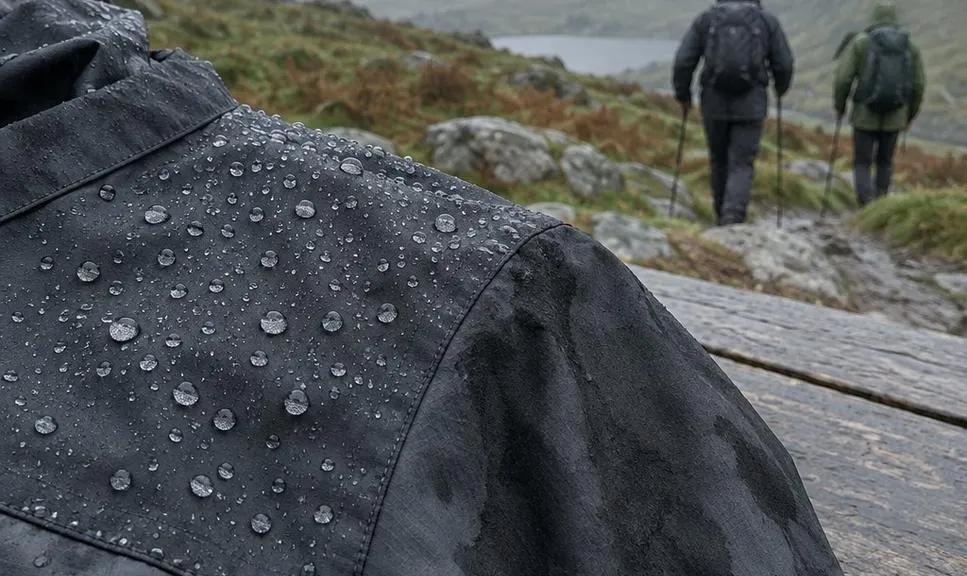
A jacket that is genuinely waterproof can still leave you damp, in two ways.
- The outer fabric wetting out, so rain stops beading and soaks into the face of the material.
- Your own sweat, trapped inside once the outer face is saturated.
On most Welsh mountain days, sweat is the bigger problem.
Every waterproof carries a durable water repellent finish on its outer face. Fresh, it makes rain bead up and roll off.
That finish wears off with dirt, sunlight and the rub of a rucksack strap.
Wetting out does not mean the jacket has stopped being waterproof.
Gore states it plainly for their own fabric: “the membrane will still ensure the waterproofness of the garment”. The garment can still feel cold and clammy once water saturates the outer layer.
That distinction matters when you are deciding whether to replace a jacket or wash it.
The hood, the seams and the venting
A good hood turns when you turn your head, and holds its shape in wind.
On an exposed ridge a hood that will not turn with you is a real nuisance. You cannot see to the side you most need to watch.
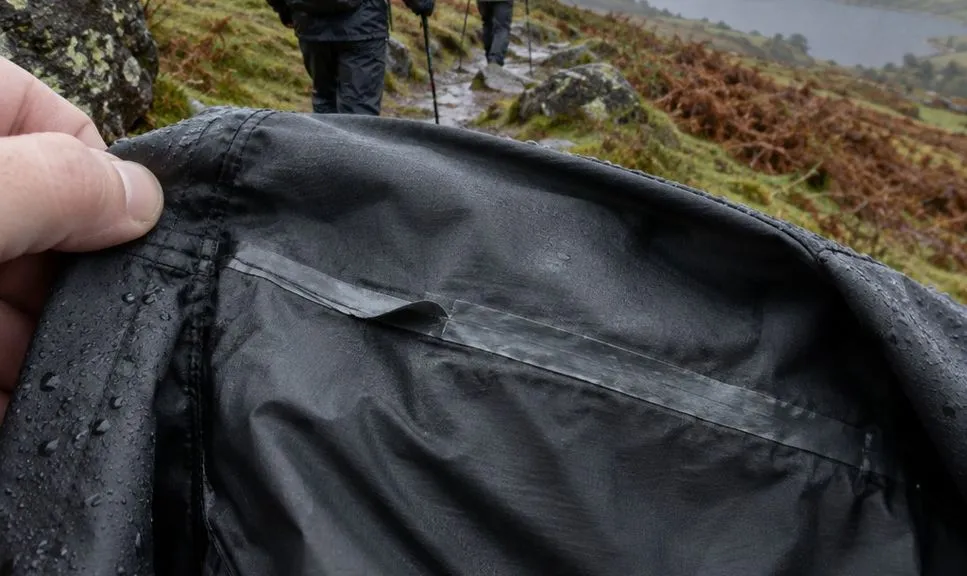
Seams are only waterproof where they are taped, and tape lifts at the edges over time. That usually starts at the shoulders, where a strap rubs.
Underarm zips are the feature none of the three above lists. They let heat out without opening the whole front to rain, and on a steady climb they do more for comfort than any fabric rating.
Looking after the jacket you already own
Washing a jacket in a proper technical wash, rather than ordinary detergent, is the first step. Detergent residue is a common reason a finish stops working early.
A wash-in or spray-on reproofer restores the outer finish afterwards.
Follow the care instructions for your own jacket rather than a general rule. Wash temperatures and tumble drying differ by fabric, and the label is the authority on yours.
The BMC’s other clothing point is worth repeating. “Cotton t-shirts and jeans are particularly cold when wet”, so keep both off the hill.
When you do not need to buy anything
Splash water on a dry shoulder and watch whether it beads or spreads into a dark patch.
That test tells you about the water repellent finish, and nothing more. A jacket that fails it is very likely still waterproof, and very likely just needs washing and reproofing.
The signs that a jacket is genuinely worn out are different:
- Seam tape lifting or peeling on the inside, usually at the shoulders first.
- Water coming through in one place while the fabric elsewhere still performs.
- Damp appearing inside after a wash and a reproof, not just discomfort.
Try a technical wash and a reproof before you replace anything. It fixes the commonest complaint.
Choosing between them
If you walk Welsh hills regularly, buy the Berghaus for the rating and accept the single point hood.
If you walk them occasionally, buy the Regatta. Taped seams and an adjustable hood, with the stock caveat above.
If your current jacket only wets out, wash and reproof it and buy nothing.
Then pack the overtrousers whatever the forecast says.
We compile and explain public route and safety information. We guide nobody and sell nothing on the hill.
The rest of the list sits in what to pack for a day in Snowdonia. Footwear has its own answer in boots or trainers for Snowdon.