Every one of Snowdon’s six main paths is graded Hard or Strenuous. At that grade the Eryri National Park Authority says full hill walking gear is essential.
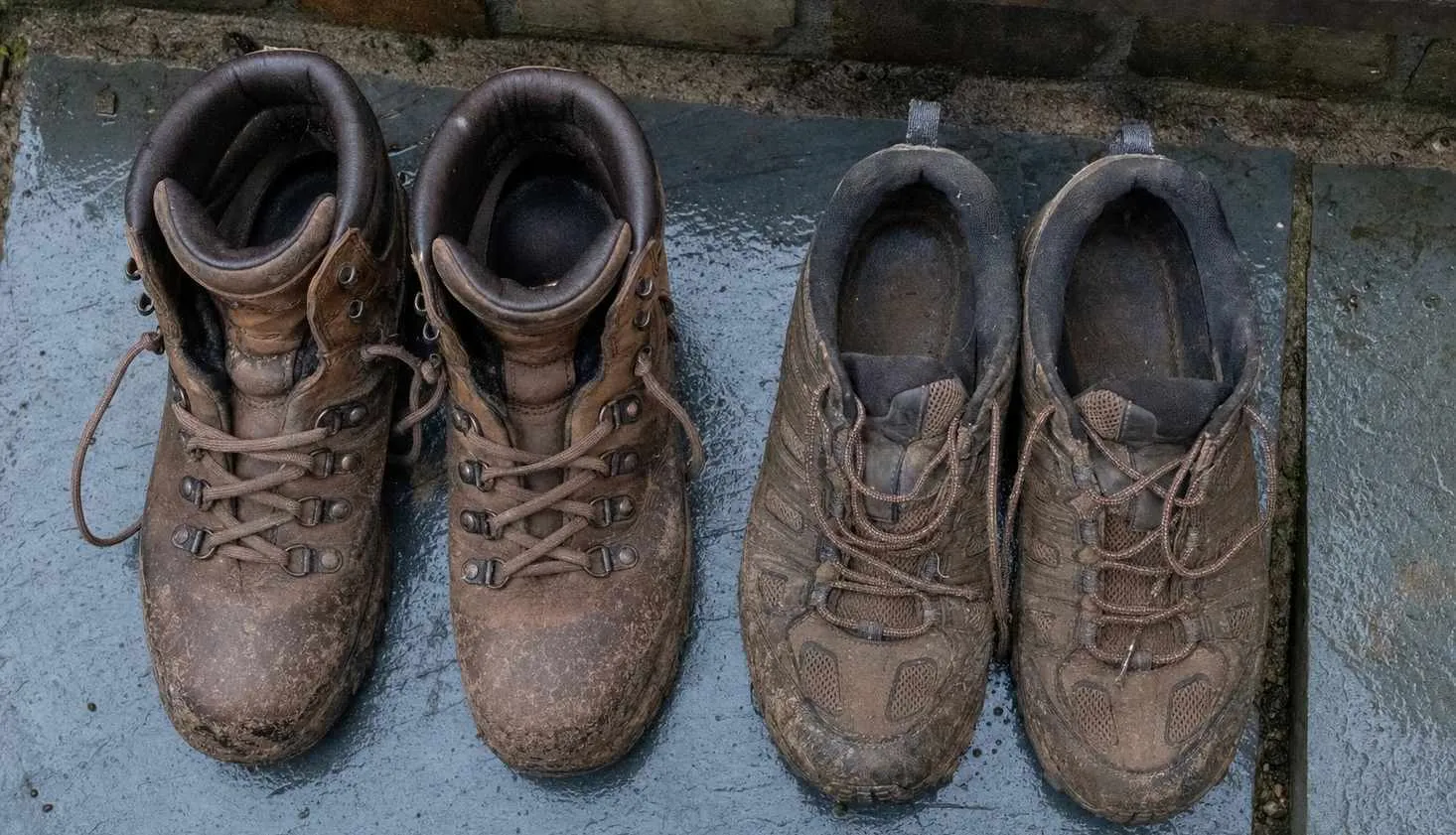
For most people that means a waterproof walking boot, and the Berghaus Hillmaster II GTX is the one to buy if you only want to buy once.
Trainers are still a fine choice on a dry day, and there is a shoe for that below.
The links to Amazon on this page are affiliate links. Should you buy through one, a small commission comes back to the site, and your price stays as it was.
| Your day out | What to carry |
|---|---|
| You will come back to the hills more than once a year | Berghaus Hillmaster II GTX |
| Snowdon is a one-off or an occasional thing | Berghaus Expeditor Ridge 2.0 |
| You prefer a shoe, and the day is dry | Salomon XA Pro 3D |
Berghaus Hillmaster II GTX
You will come back to the hills more than once a year
Berghaus Hillmaster II GTX walking boot Gore-Tex membrane, leather upperVibram rubber outsole Read the full specification on AmazonBest for the walker who will come back to the hills more than once a year.
A Gore-Tex lined leather boot from a British hill brand, with the ankle support that matters on a tired descent. This is the category the National Park grading is pointing at.
Berghaus Expeditor Ridge 2.0
Your first proper boot, for an occasional trip up Snowdon
Berghaus Expeditor Ridge 2.0 walking boot AQ waterproof liningEVA midsole and OrthoLite footbed Read the full specification on AmazonBest for a first proper boot.
The Expeditor is the entry point to the same brand. Waterproof, cushioned, and enough boot for the main Snowdon paths in summer and autumn.
Check the Berghaus Expeditor Ridge 2.0 on Amazon
Buy this if Snowdon is a one-off or an occasional thing. Buy the Hillmaster if it is going to become a habit.
Salomon XA Pro 3D
You are a confident walker who prefers a shoe, on a dry day
Salomon XA Pro 3D trail shoe Contagrip rubber outsole3D Advanced Chassis for stability Read the full specification on AmazonBest for the confident walker who genuinely prefers a shoe, on a dry day.
If you are going to wear trainers on Snowdon, wear a trail shoe rather than a road-running shoe. The tread is deeper and the sole is built for uneven rock.
Check the Salomon XA Pro 3D on Amazon
This is not a substitute for a boot on a wet day or a winter day. It is the right tool for a fit, sure-footed walker on dry ground.
What the National Park grading actually says
The Eryri National Park Authority grades every walk in the park, and footwear advice comes attached to each grade.
- Access for All: “Comfortable shoes or trainers are suitable for this route.”
- Easy: “Trainers or comfortable walking shoes are recommended.”
- Leisurely: “Walking boots and waterproof clothing are recommended.”
- Moderate: “Walking boots and waterproof layers are essential.”
Leisurely is where the guidance turns from suggestion to instruction, and it does not soften again.
Snowdon’s six main paths all sit at Hard or Strenuous, which is above Moderate. At that grade the Park’s own words are “Full hill walking gear is essential. Specialist equipment may be required under winter conditions.”
It adds who the grade is for: “Only suitable for experienced country walkers with a good level of fitness.”
What actually changes underfoot
Snowdon’s paths are not uniformly rough. Long stretches are wide, dry and no harder than a decent trail.
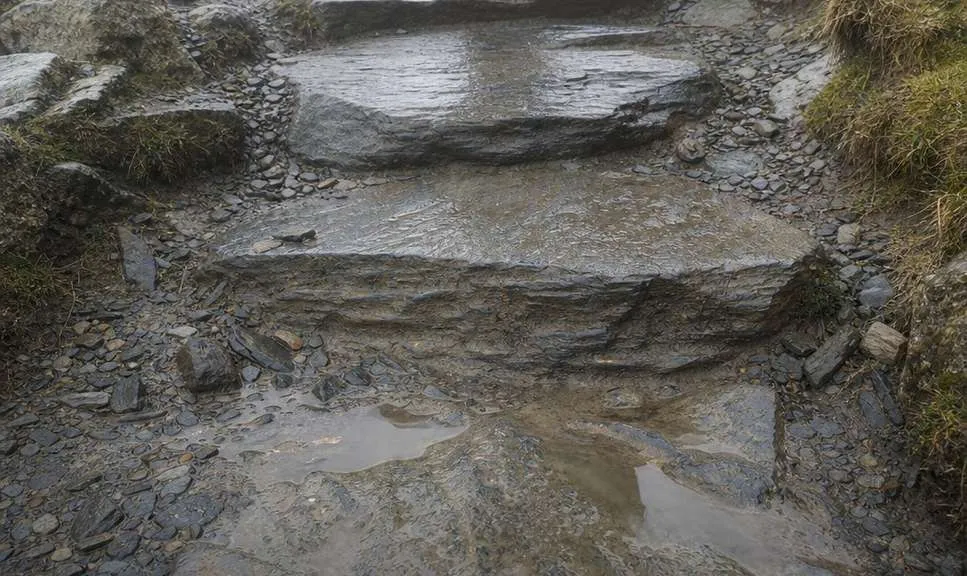
The difficulty sits in specific places. Stone steps near the summit, and on the Pyg Track and Miners’ Track, become slippery when wet.
Above the halfway point on several routes, loose scree sits over harder rock and shifts under any sole.
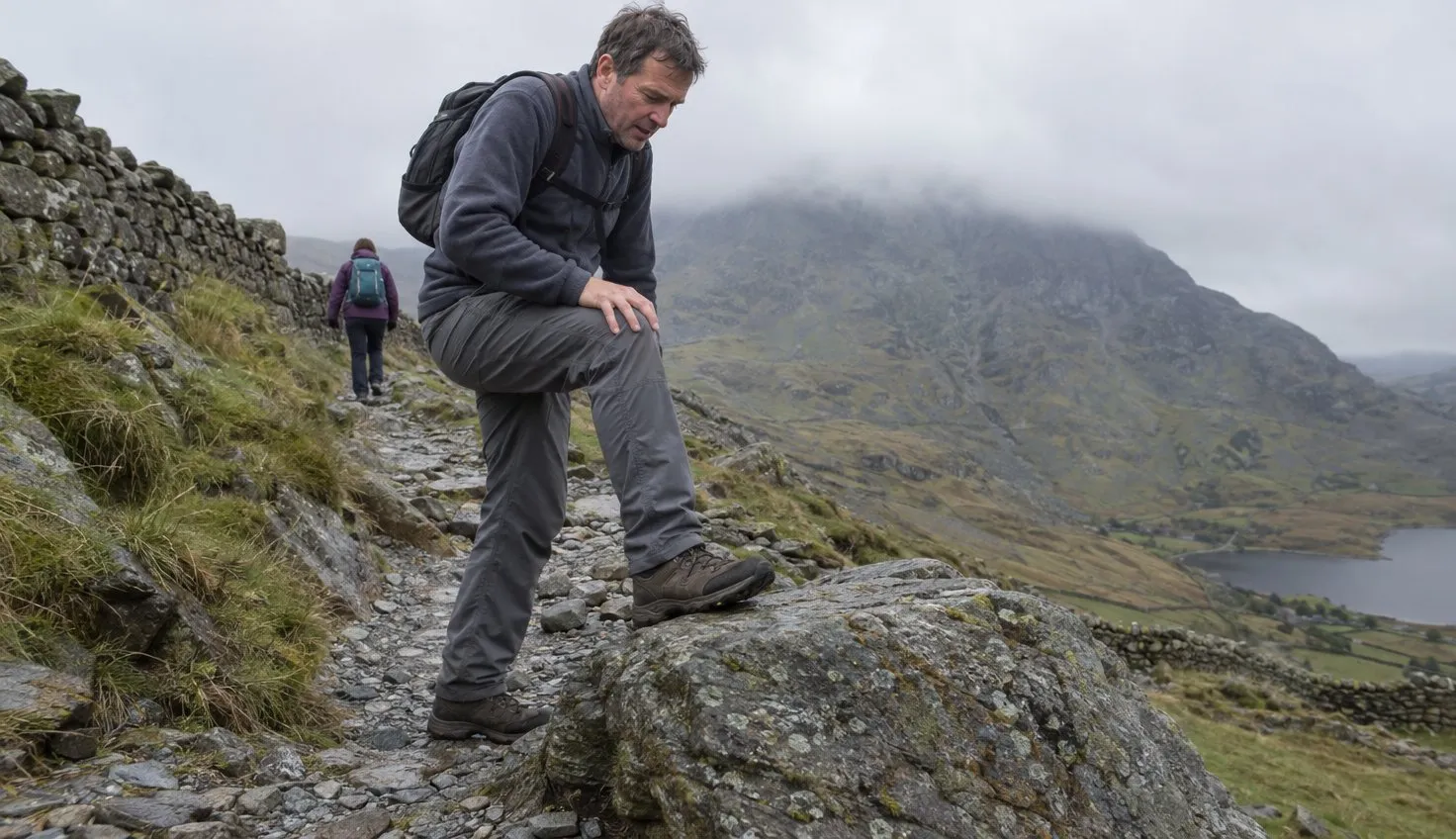
Soft midsoles give you less support on the descent, when legs are tired and each step lands harder. That is where ankles turn, not on the flat approach.
A dry car park at eight in the morning does not promise a dry summit by lunchtime.
When trainers still make sense
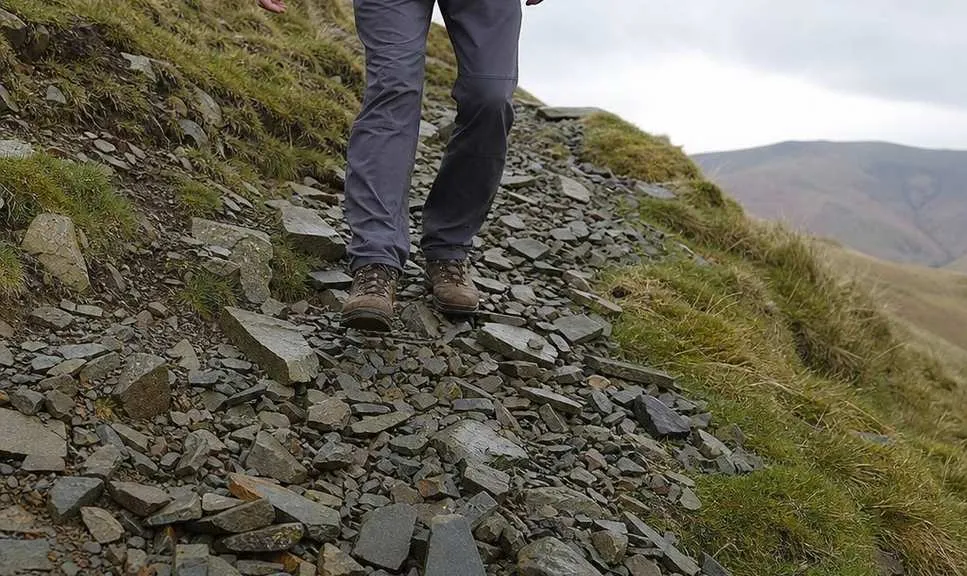
None of this rules trainers out. On a dry summer day, on the main paths, a light-footed and experienced walker can have a genuinely good day in trail shoes.
Adventure Smart Wales frames it as three questions rather than a kit list:
- Am I confident I have the knowledge and skills for the day?
- Do I know what the weather will be like?
- Do I have the right gear?
Answer all three questions and trainers can be right for the right walker on the right day. On a first attempt, in changeable weather, on tired legs late in the walk, the answer is usually different.
Fit matters more than the category
A well-fitting trainer will treat you better all day than a boot that rubs.
Comfort on your own feet matters more than the label every time.
Adventure Smart Wales puts it plainly. Footwear “needs to fit well; there is nothing like a blister to ruin a good day’s walking!”
Boots bought a size too small cancel out the reason you bought boots at all. So do trainers half a size too big or too small, bought because they were on offer.
Comfort on your own feet matters more than the label every time.
Winter is a different matter entirely
Everything above assumes fair conditions on dry ground.
Winter turns those same paths into something closer to mountaineering, footwear included. That is covered properly in what actually changes on Snowdon once winter arrives, and it goes well beyond swapping one shoe for another.
Wear them in before the day
Whichever way you decide, do not let Snowdon be the first outing for the shoes.
A boot that feels fine in the shop can rub after two hours. That is worth finding out near a car, not partway along the path you have chosen.
Walk a few miles on lower ground first.
We compile and explain public route and safety information. We guide nobody and sell nothing on the hill.
Then pack the rest properly. What to pack for a day in Snowdonia matters as much as what is on your feet. A waterproof jacket is the other thing people get wrong.