From roughly November to April, the six routes up Snowdon stop being walks and start being something closer to mountaineering routes.
The distance does not change. The car parks stay where they are, and the paths keep their names. What changes is what covers them underfoot.
A good winter day is still available, even without winter skills.
What actually changes underfoot
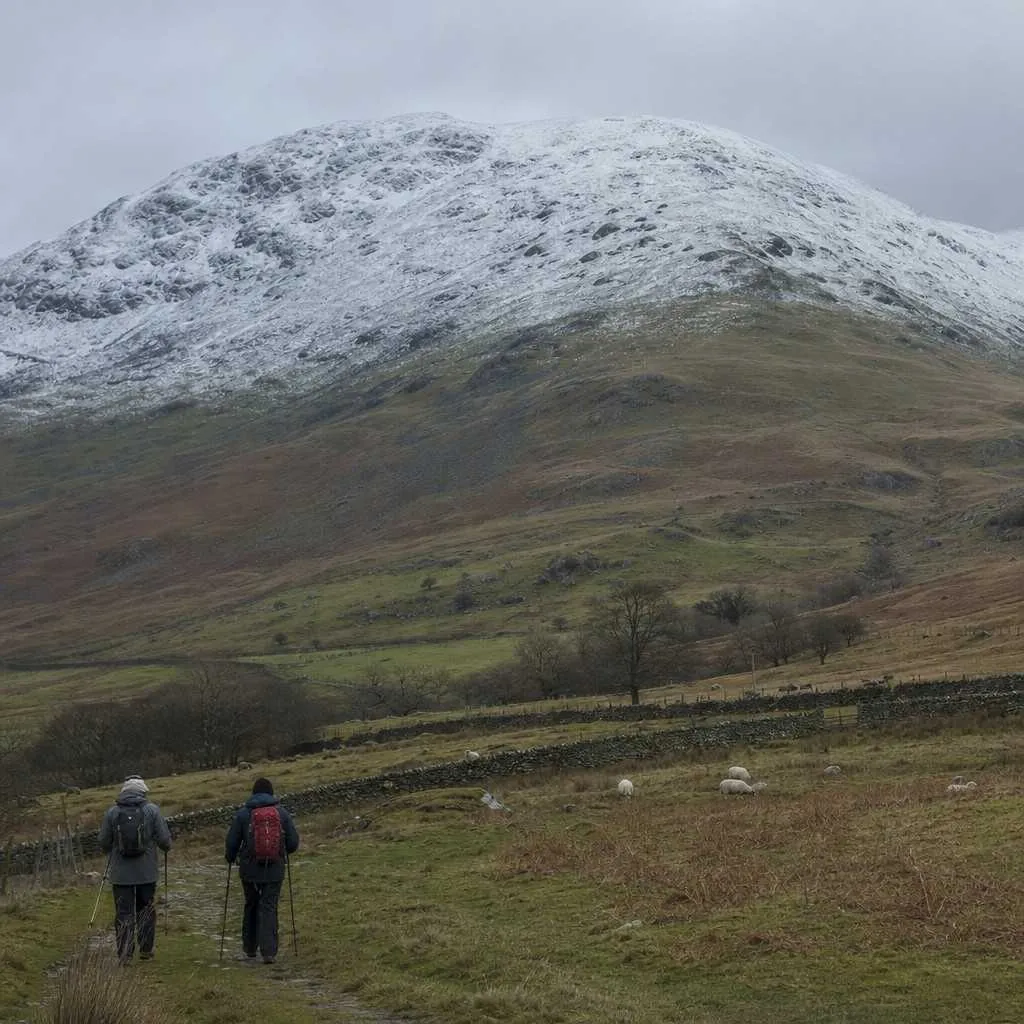
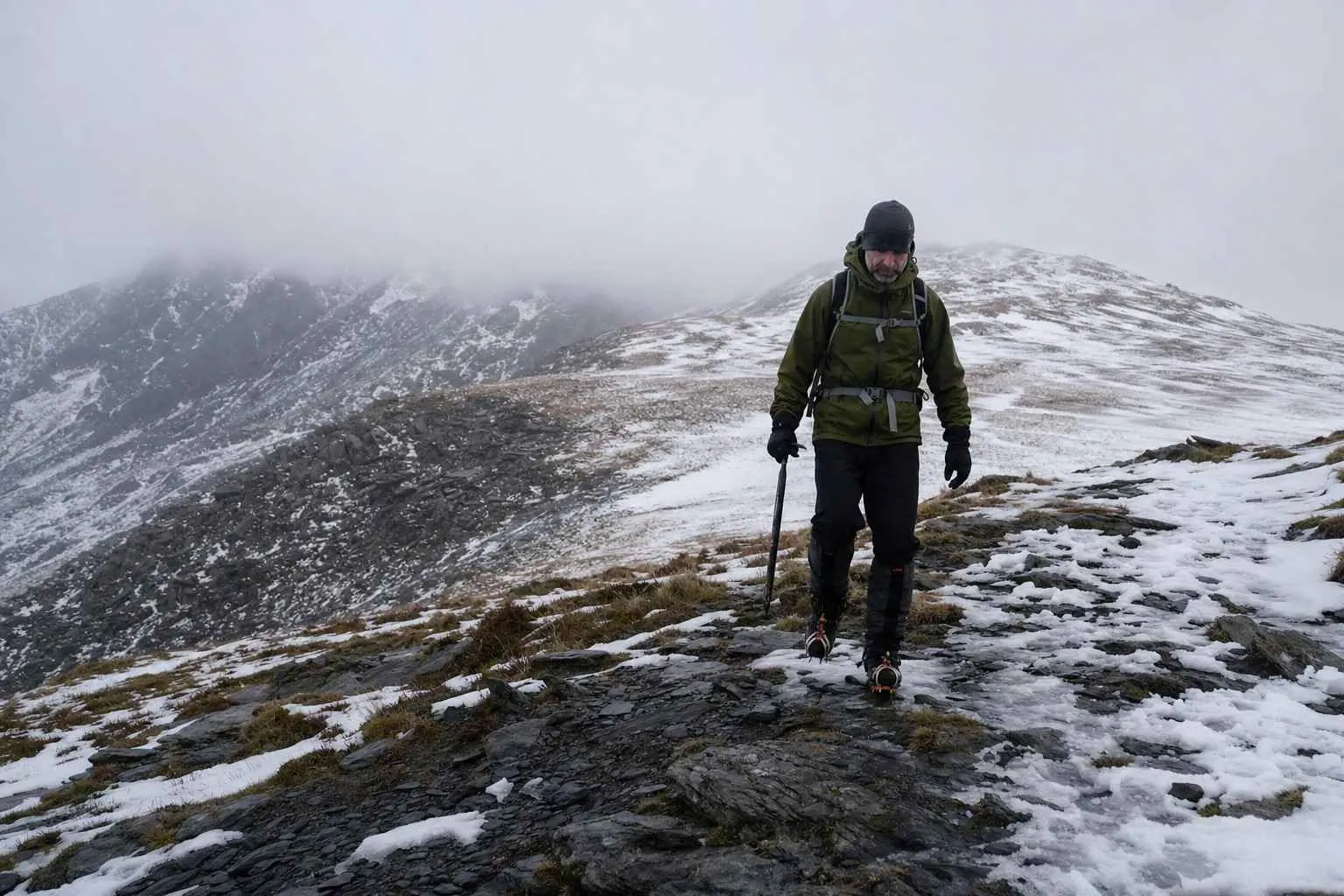
Fresh snow is not usually the problem; compacted snow and often-hidden ice are.
Foot traffic packs fresh snow down within a day or two on the popular paths. The Eryri National Park Authority says that “as the snow gets compacted, it becomes extremely slippery.”
Boots that grip well in dry snow can skate on compacted snow. The risk grows where a path angles across a slope rather than climbing straight up it.
Ice forms on that same layer, often invisibly, wherever meltwater refreezes overnight. Look for it on rock steps, paved sections near the summit, and shaded ground through midwinter.
Snowdonia keeps a real snow line in winter. The lower slopes can stay green and wet while the summit holds ice and old snow.
What the National Park requires
The Park says reaching the summit in winter needs “specialised equipment such as crampons or ice axes”, and “knowing how to use them.”
It pairs the equipment with the skill, not with owning it. A pair of crampons in a rucksack does nothing for a walker who has never practised the footwork on frozen ground.
The same page adds a second warning: “during the winter, snow can cover much of the summit.”
Which state the mountain is in
Winter on Snowdon is not one switch that flips in November. The mountain moves between calmer days and full winter conditions right through the season.
The Park publishes Ground Condition Reports for Yr Wyddfa every Tuesday and Friday through the late autumn and winter months. They are on the Yr Wyddfa Live website.
Conditions on the mountain “can be particularly treacherous during these seasons”, and the reports give “detailed information on what to expect and how to plan around those expectations.”
Check the report closest to the day you go, not one from earlier in the week.
Pair it with the mountain forecast from the Met Office, Britain’s public weather service. It names a freezing level: the height above which you should expect ice rather than rain.
Ordnance Survey gives the summit as 1,085 metres. A freezing level below that means the top of Snowdon is in winter while the valley is merely wet.
Short days squeeze a long walk
A route that fits a summer afternoon can run past dusk in December or January.
Every route up Snowdon takes hours in any season. Winter does not shorten the walk. It shortens the daylight you have to do it in, and slower movement on ice narrows that margin further.
Work out how long the walk takes, and when you need to leave, and plan backwards from sunset rather than forwards from a hopeful start time.
If you are still going up
The National Park’s own safety advice is direct about it, in every season. These hills can be dangerous if you don’t take the necessary steps to stay safe.
The Park lists the basics for any walk here, winter included, and crampons and an ice axe are not on it.
- Map and compass, even on a route you know well
- Thermal layers
- Waterproof layers
- Suitable hiking boots
- Gaiters, for snow and wet ground over the boot top
- A fully charged phone
- A torch
- A whistle
- A first aid kit
- Food and drink
If your route needs crampons or an ice axe, the practice matters as much as owning them.
The guide to what to pack for a day in Snowdonia goes through the reasoning for each item.
The British Mountaineering Council adds one winter item the Park list does not name: an emergency shelter. It puts a bivi bag and a group shelter side by side as the two answers.
The Park warns against relying too heavily on forecasts. “Remember that the weather can change without warning.”
Tell someone your route and when you expect to be back. If the mountain does not feel right, that is reason enough to turn around. The Park says to be “prepared to alter your plans or turn back if conditions deteriorate.” In an emergency, dial 999.
Knowing what goes wrong here, and how mountain rescue works, is worth knowing before you need it.
Where a good winter day still is
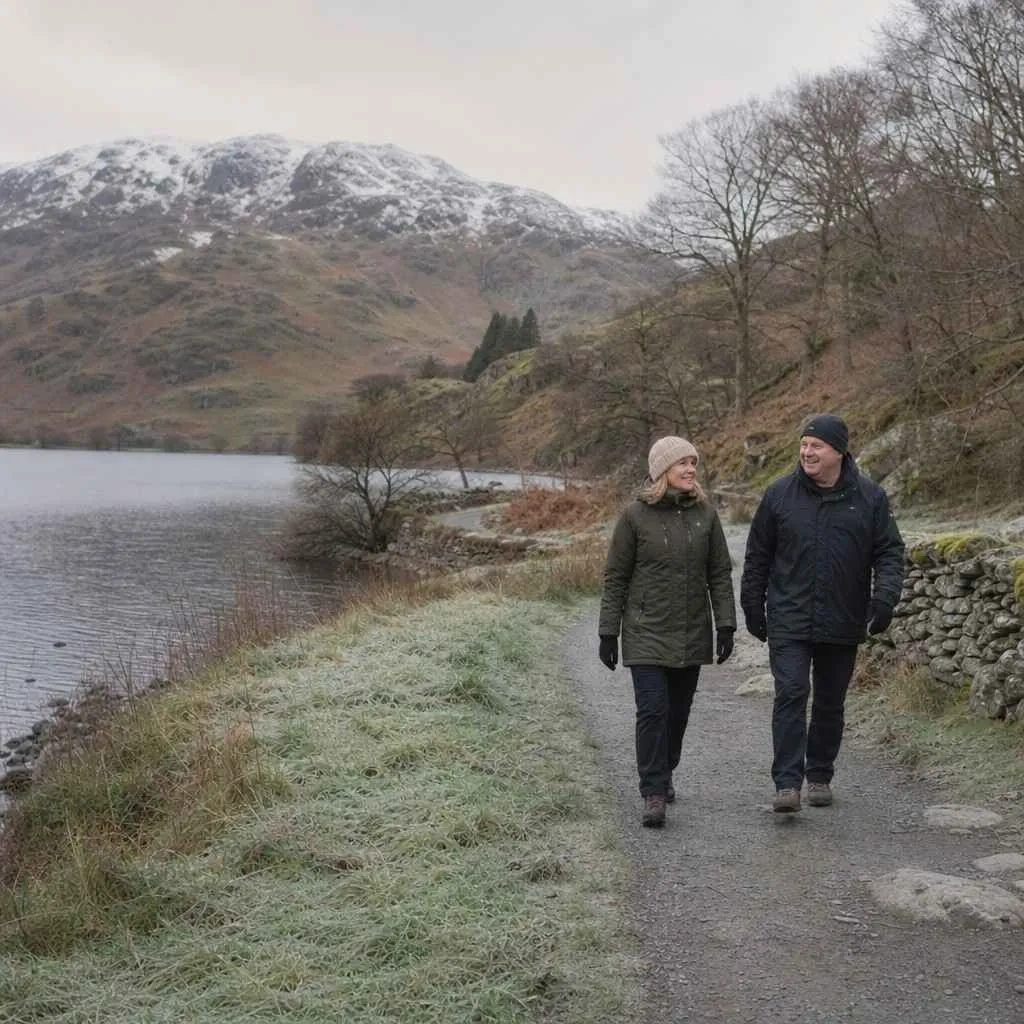
None of the Park’s autumn and winter walks ask for winter skill, technical kit, or a Ground Condition Report.
The Park describes them as “easy to get around without having to climb a mountain.”
- Bala Town River and Lake Path: begins at the shores of Llyn Tegid, follows the Dyfrdwy riverbanks, and threads through the streets of Y Bala.
- Foel Ispri Path: a short, accessible path with, in the National Park’s own words, the best view of the Mawddach estuary in the park.
- Mawddach Trail: between Dolgellau and Barmouth, one of the most flexible and accessible trails in Eryri.
- Dôl Idris Path: an accessible route on the foothills of Cader Idris.
- Lôn Gwyrfai: a multi-use path between Rhyd Ddu and Beddgelert, with wide surfaces suitable for some powered tramper type vehicles.
They ask for sturdy shoes. Woodland paths “can often become slippery”, so grip matters here too.
For more like these, gentler walks away from the summit covers five more.
A cold morning on the Mawddach
Picture the Mawddach Trail on a clear, cold morning. The tide is out, and Cader Idris carries real snow across the water.
That is still Eryri in winter, and it is not a consolation prize. The mountain will be there once you have the skills, or the season, for a winter summit.
We compile and explain public route and safety information. We guide nobody and sell nothing on the hill.